

By Bob Seidenberg
Two structures on property formerly the home of famed architect Daniel H. Burnham will likely be torn down to make room for a couple’s new home under a proposal approved in a provisional straw vote by the city’s Preservation Commission on Tuesday.
Commission members voted 6-2 in support of architect Dan Wheeler’s request on behalf of homeowners Diane and Paulo Fellin for Certificate of Appropriatness to demolish the structures on the property at 111 Burnham Place in the city’s Lakeshore Historic District where the architect once lived, to build a new one.
The one story single family home to be demolished was built in 1948, long after Burnham died as part of a subdivision of his estate and consisted of little architectural significance, commission members agreed.
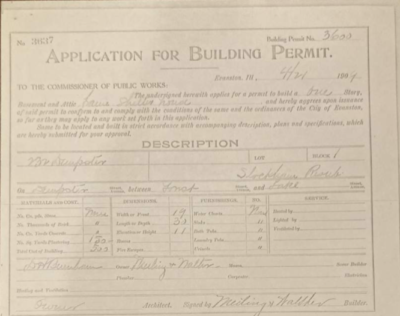
Local preservationists, though, have brought focus to a “tea house” adjoined at the east end of the house, believed to have been designed by Burnham and built in 1909 as deserving of being preserved.
Commission members wrestled with a decision first at their Dec. 9 meeting and then again Tuesday night in a continuation of their discussion.
In a report submitted to the Commission for their Dec. 9 meeting, Kris Hartzell, of the Evanston History Center, said the structure that now constitutes the eastern section of the 111 Burnham Place residence “is highly significant as it is the only known structure designed by Daniel H. Burnham for himself.”
Known as the “Tea House,” the structure also represents Burnham’s work at the World’s Columbian Exposition of 1893 on a Japanese tea house on the Exposition grounds, she reported in her research.
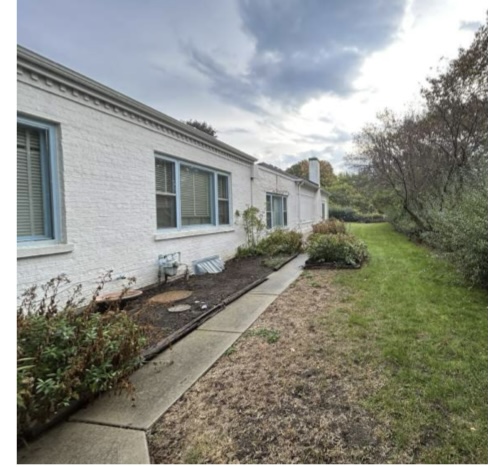
But members of the citizen commission, dedicated preservationists in their own right, reluctantly found too little of the original “tea house’s” features were intact to support denying demolition under their ordinance, voting 6-2 in support of the application.
Many went back in their comments to 1948 when a new home was built on the property next to Burnham’s “Tea House” or shelter.
“If you look at the framing of door and windows, if you look at the roof overhang, I think it’s (the original structure) a very simplified classic,” pointed out Commission member Stuart Cohen, an architect.
He argued, though, the remodeling of the building at that time “basically the changing of its architectural style, destroy the integrity in a very complete way.”
Commission member Sarah M.Dreller, an architectural historian, noted “if it were my property I’d keep it. But I don’t know if we have the right to force somebody to keep it.”
’Sins of the past’
“I don’t know, if it is appropriate for us to force them to keep a building that has been so altered over time that it does not express what it was supposed to have been doing,” she said.
“I think this is tough,” added Commission member Thomas Ahleman, also an architect, who had called for the straw vote. “But I think to preserve the house is to try to make up for the sins of the past…(in) 1948 when the building was compromised and we can’t go back in time. I think, given the the number of mid century modern buildings in the neighborhood and scale of the proposed building and materials it’s an appropriate addition.”
Commissioners Amanda Ziehm and Carl Klein, who cast the dissenting votes, argued strongest for preserving the “tea house” in some form.
“I think this is tough,” said Commission member Thomas Ahleman, who had called for the straw vote, starting a round table discussion of members weighing in, but I think to preserve the house is to try to make up for the sins of the past…(in) 1948 when the building was compromised and we can’t go back in time. I think, given the the number of mid century modern buildings in the neighborhood and scale of the proposed building and materials it’s an appropriate addition.”
A ‘cultural’ not an architectural decision: Ziehm
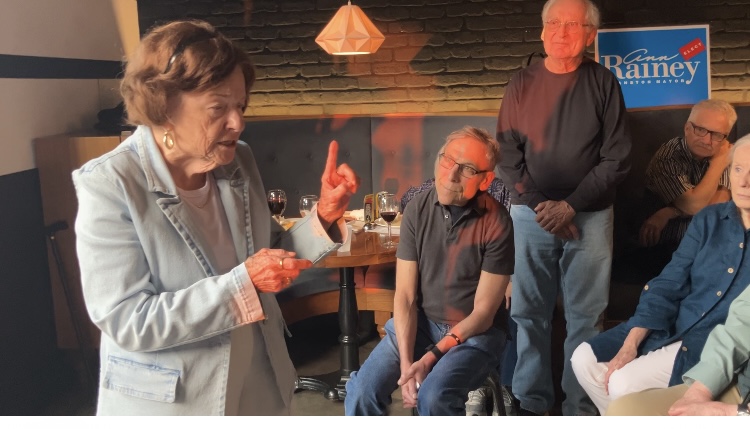
“I think this is culturally significant, not because it’s Burnham’s finest building,” said Ziehm. “ I know this wasn’t built until later in life.”
But delving deeper into the architect’s history, his role in the “City Beautiful” movement, “he was incorporating more landscaping, open spaces. And I feel like this was maybe a culmination of kind where his architectural style was going. So I think it’s an important reminder of history and attachment to history.
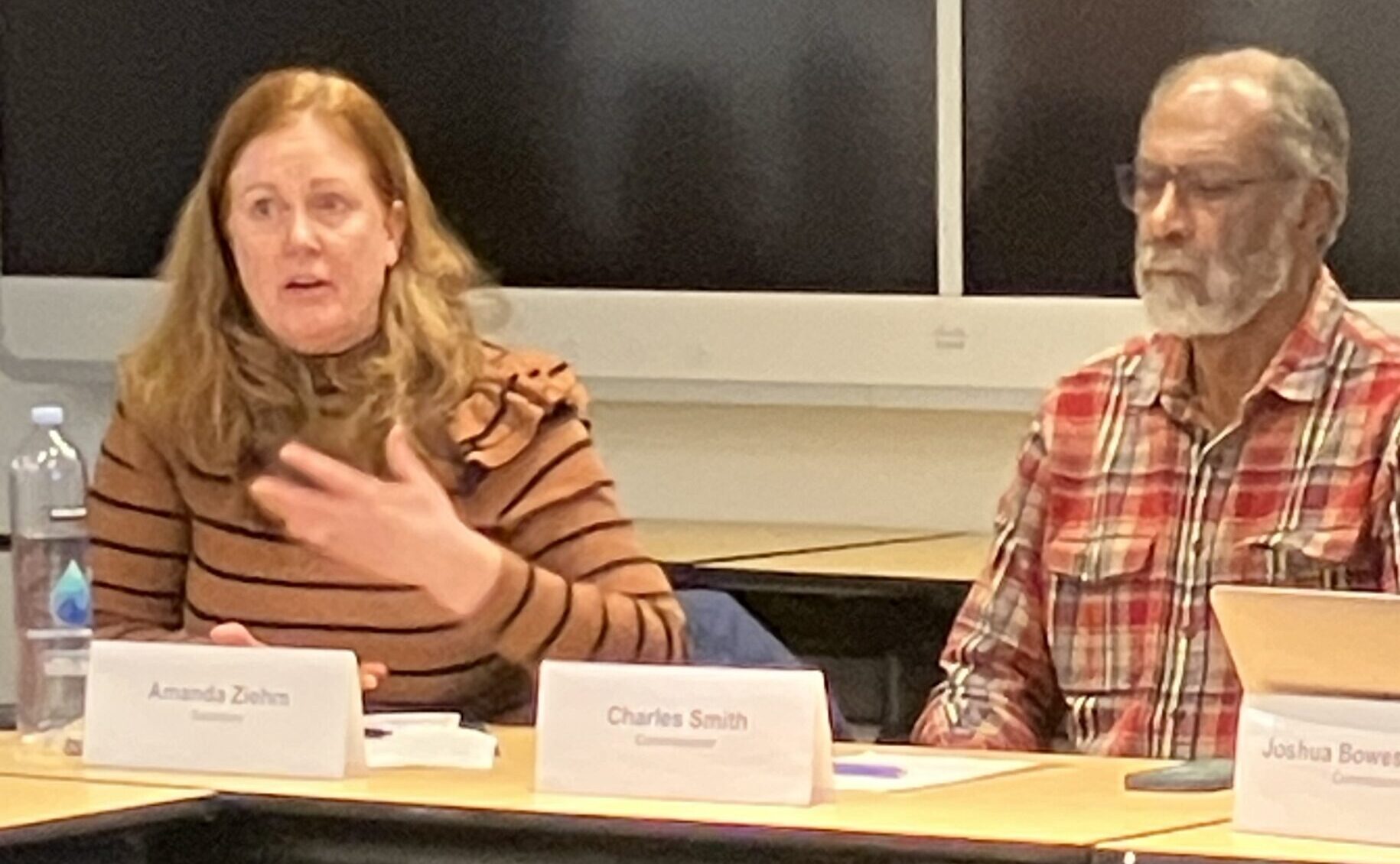
“I understand the building’s integrity has been compromised, (but) this is an important building. I think it’s more cultural than architectural and I think we’re focusing a lot on architectural and that’s just one basic (criteria.)’
It ‘can be done’: argues chair
Commission chair Carl Klein said he agreed with Commissioner Matthew Johnson (not at the meeting) that the issue represented one of the most difficult votes in front of the group.
“ I do want that connection with Burnham somehow saved, whether it’s on site or potentially somewhere else.”
He presented earlier the example of president and founding father James Madison’s house.
“You know over time his son got into gambling and steeplechase racing, and they.built an art deco addition to the house and people said, ‘oh, no, it’s gone.’ But then they went to the extreme. They removed the Art Deco addition, and they restored the original house. I mean, that can be done.”
- “That a report be developed for the existing shelter house structure that includes historical photographs, high-resolution photographs of existing interior and exterior conditions, and as-built drawings, and that this report be made available at a publicly accessible repository (Public Library, Evanston History Center, Art Institute etc).
- That reasonable efforts be taken to salvage portions of the structure containing visual interest or high quality material and that institutions of interest be afforded a reasonable opportunity to receive salvaged material.
- That reasonable efforts be taken before and during excavation of the site as it relates to the potential discovery of archaeological resources including all human-made artifacts and other domestic debris.”