
By Bob Seidenberg
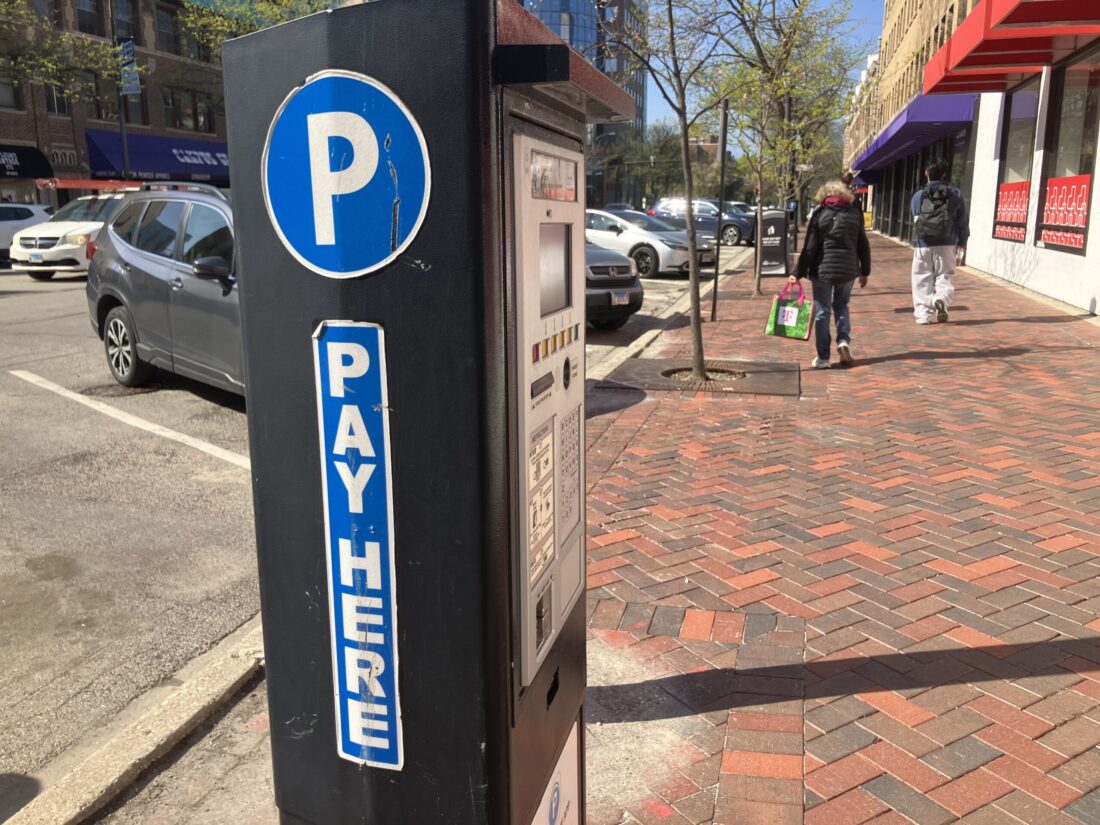
Evanston should consider using a variety of strategies to meet its parking challenges, including adjusting pricing according to demand, a consultant told members of the Economic Development Committee on Wednesday.
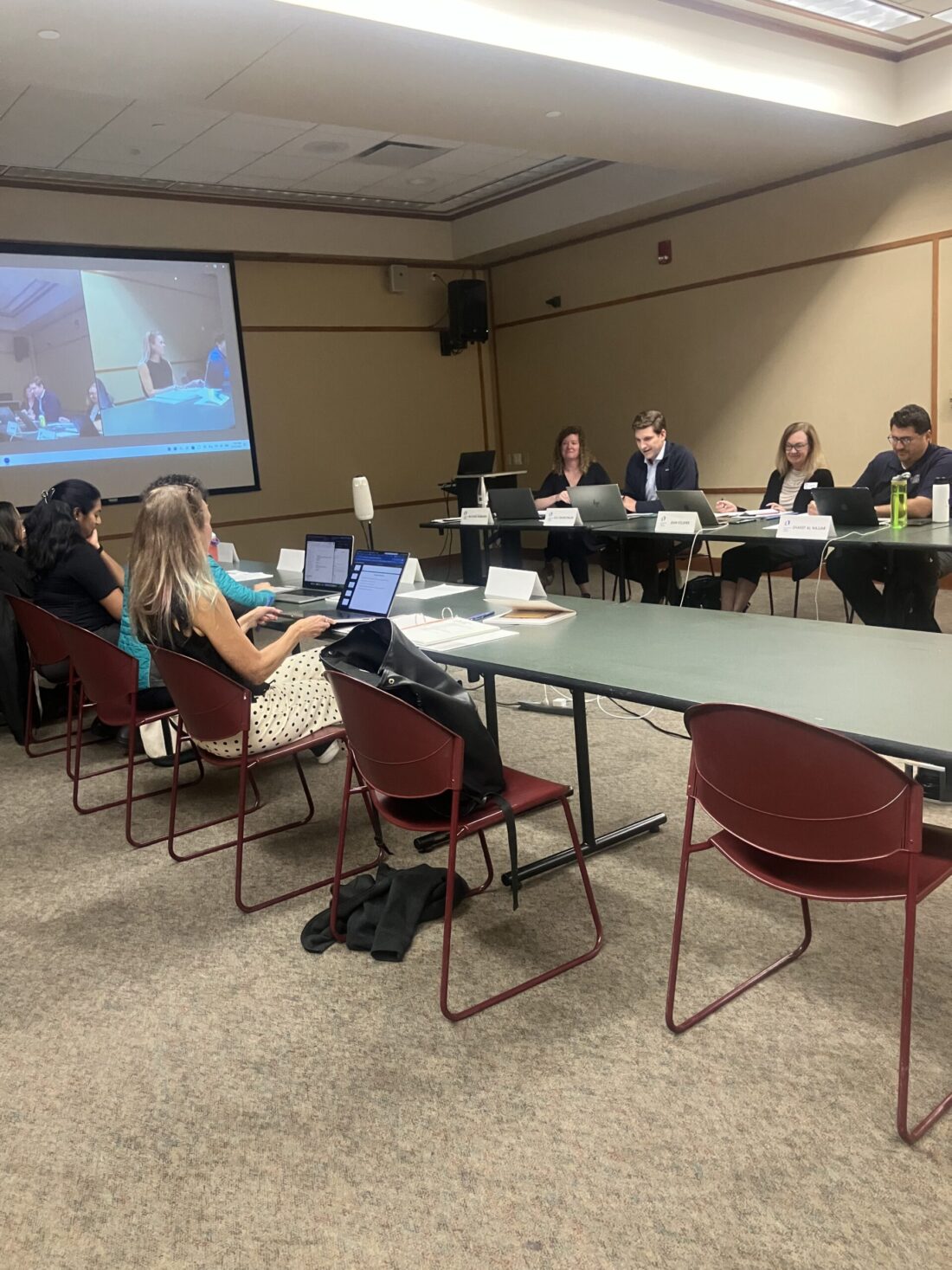
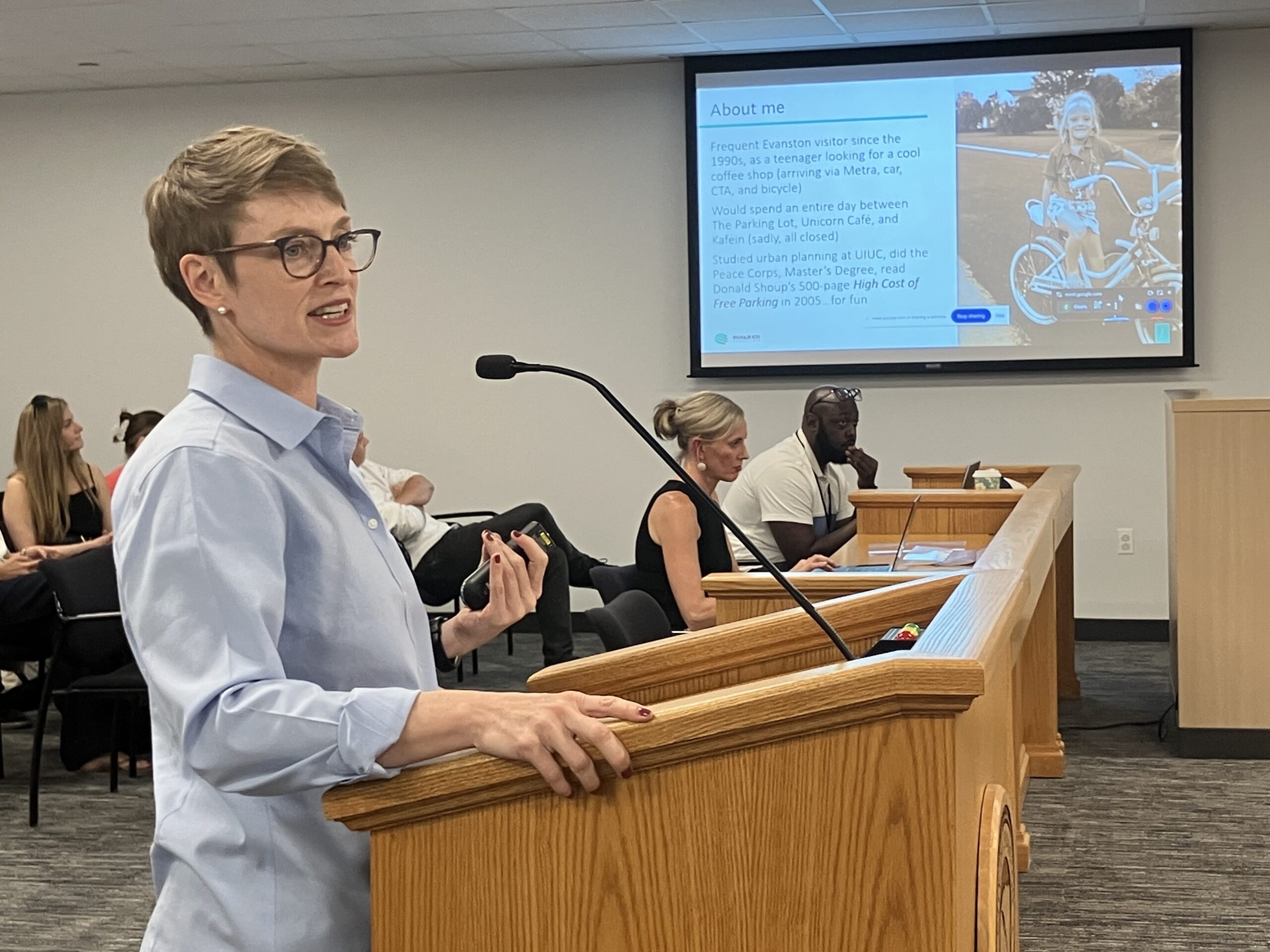
Lindsay Bayley, formerly with the Chicago Metropolitan Agency for Planning (CMAP), and currently with Walker Consultants, a firm that specializes “in all things parking,” addressed the committee, which has been reviewing its parking policies in business districts.
Her comments were decidedly critical in one area of what some committee members and business community representatives have expressed interest exploring — creating free two hour parking zones in some areas, to better compete with nearby shopping areas such as Wilmette and Westfield Old Orchard where free parking has been a major draw.
“Evanston is not in competition with the mall — you’re competing on place,” Bayley told committee members, “and you have so many people that are already here, and you have people walking, biking, taking transit.
“Everyone wants free convenient, convenient available parking and in a growing thriving downtown that doesn’t exist.
Parking in a town like Evanston “is going to get you to many more places” than it would in a mall, where shoppers have to walk a distance before they even reach a store, she pointed out.
Wilmette, she maintained, conducted a parking study in 2024 “because so many people were complaining about parking in that suburb.
“Everyone wants free convenient, convenient available parking and in a growing thriving downtown that doesn’t exist,” she summarized. “Any place that worth its weight in salt that will have a parking problem,” she asserted. They’re [those other communities are] just lower on the chart than of parking strategies than Evanston is.”
Book had strong influence
Her presentation didn’t make any reference to some of the challenges that has spurred the city to look deeper into its parking policies, including historic high vacancies and slow recovery from Covid.
She cited the influence of urbanologist Donald Shoup’s 2005 book “The High Cost of Free Parking,” on her thinking. (Councilmember Jonathan Nieuwsma, chairing Wednesday’s EDC meeting, has also made mention of in prior discussions of the subject.)
Shoup’s findings can essentially be boiled down to main to three principles,” she told committee members during her presentation, which ran nearly an hour and a half long.
“First, you want to optimize your parking system,” she said. “You want to charge the lowest price to make sure that there will be about one space available per block.
“Second, you want that meter revenue to return back where it was collected to help make improvements.
San Diego is doing that, she said, using parking revenues for sidewalk improvements rather than putting it back into that city’s General Fund.
The “third principle is to get rid of costly parking mandates,” she maintained. In her paper for the CMAP, she noted that as an alternative some municipalities allow developers to pay a fee in lieu of constructing some or all of that parking.” Shoup had argued that benefits of such a system include more support by developers for historic preservation, given the challenge that parking may pose for adaptive reuse; as well as more shared parking, potentially reducing the total number of spaces needed in the area.
As an overall policy, she explained, “You want a free spot in front of where you are going that is always available, but that’s not something you can really count on when you have major draws to your areas.”
“So you need to offer options to meet your customers’ needs, and it helps to figure out what the hierarchy is,” she said, “and the most convenient spaces should be for your customers and short-term needs. The less convenient ones, then, “should be for longer parking [times] — that’s your employees, youR residentS and people who are taking transit to leave the commuter.
Temporarily off the hook
In that vein, “Enforcement is needed to show people that there are repercussions for not following the regulations,” she said.
She related that one community her consulting firm worked with offered a warning on the issuance of its first parking violation that said “Your second one will have a double fee. ‘We will charge you for the violation from the first time and the second time, but right now we’re letting you off the hook.’”
She singled out “curb management” as a tool the city might put to use in its changes. “Rather than just having one price for all the parking, you really think about how the curb is being used and where you want people to go and you adjust the prices based on [that]).
The city of San Francisco, for instance, did a huge pilot program around that concept, where block by block they changed rates, she said.
During discussion, committee member Andy Vick, executive director of Downtown Evanston, the non-profit organization that represents business owners’ interests downtown, asked Bayley how she would respond to a resident who told him her friends don’t like coming to Evanston because of its parking policies.
Bayley acknowledged that some may just not want to pay for parking. She suggested another possibility would be creating options, for example, where one might have to go seven blocks away for free parking, “But if everybody’s trying to park in front of the one restaurant that has two parking spots in front of it, you can’t accommodate all them.”
Committee members didn’t take a vote on any changes to parking policy, which Economic Development Manager Paul Zalmezak said should regarded as one of a number of conversations that officials plan to have on the issue through the rest of the year.
“The whole point of this is we have heard there’s a desire for change, and we’re trying to level set and figure out what that change looks like,” he said.
Several spoke in support of a proposal advanced by Councilmember Tom Suffredin, 6th, of the need for surveys. He said flexibility will be needed, first to solicit and receive the feedback from individual businesses, then to determine “whether we can create a framework that allows us to make changes that would be beneficial to them.”
A constant concern
During public comment earlier in the meeting, EDC members fielded comments on both sides of the issue.
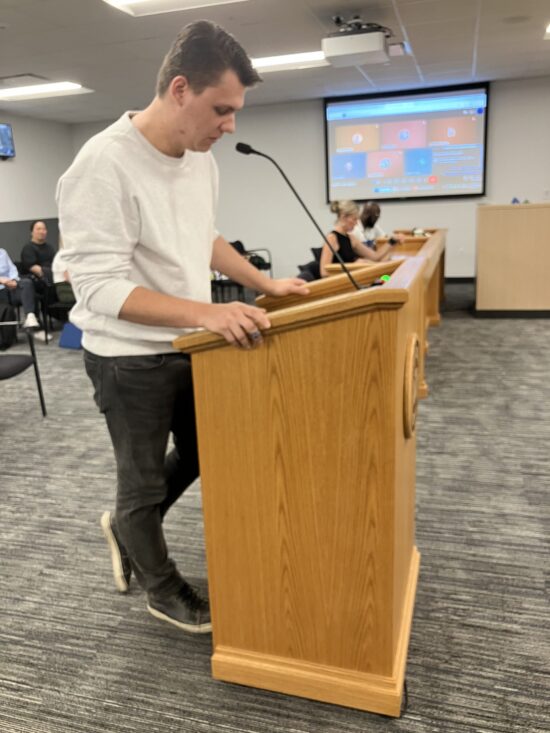
Robert Keding, chair of the Evanston Transit Alliance, noted that research shows that “free or underpriced street parking encourages car use, reduces the availability of open spots and increases cruising and congestion, but it also shows the customers who arrive by foot, bike or transit in communities like Evanston visit businesses more frequently and spend more money than those who drive.”
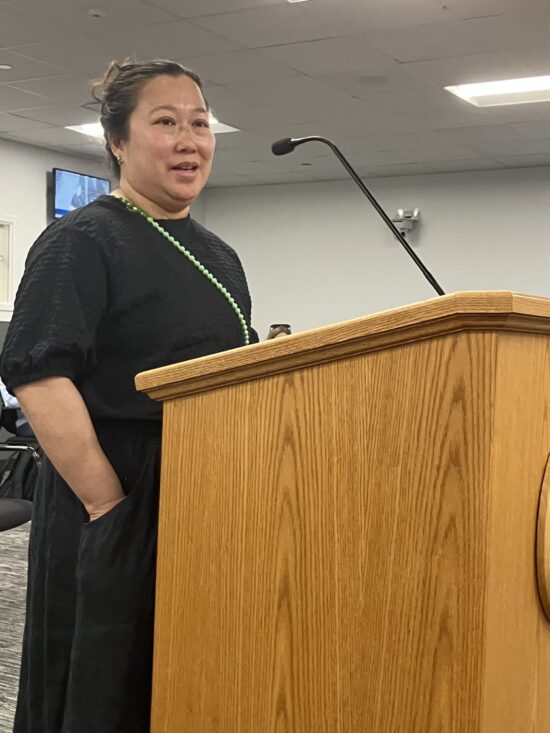
Maggie Peng, owner of Pink & Tan, a home goods store at 604 Dempster ST., noted, “As a small business owner I’m constantly [watching] the street and the. burden of meter parking for our customers, some of whom come from far as far north as Lake Forest and as far south as Hyde Park.
“So oftentimes, I see two or three people, maybe even more, having lunch and just wanting to wander around, and they’re constantly looking at their watch, like, ‘When did you park?’ And this just creates a real barrier,” she said.