
By Bob Seidenberg
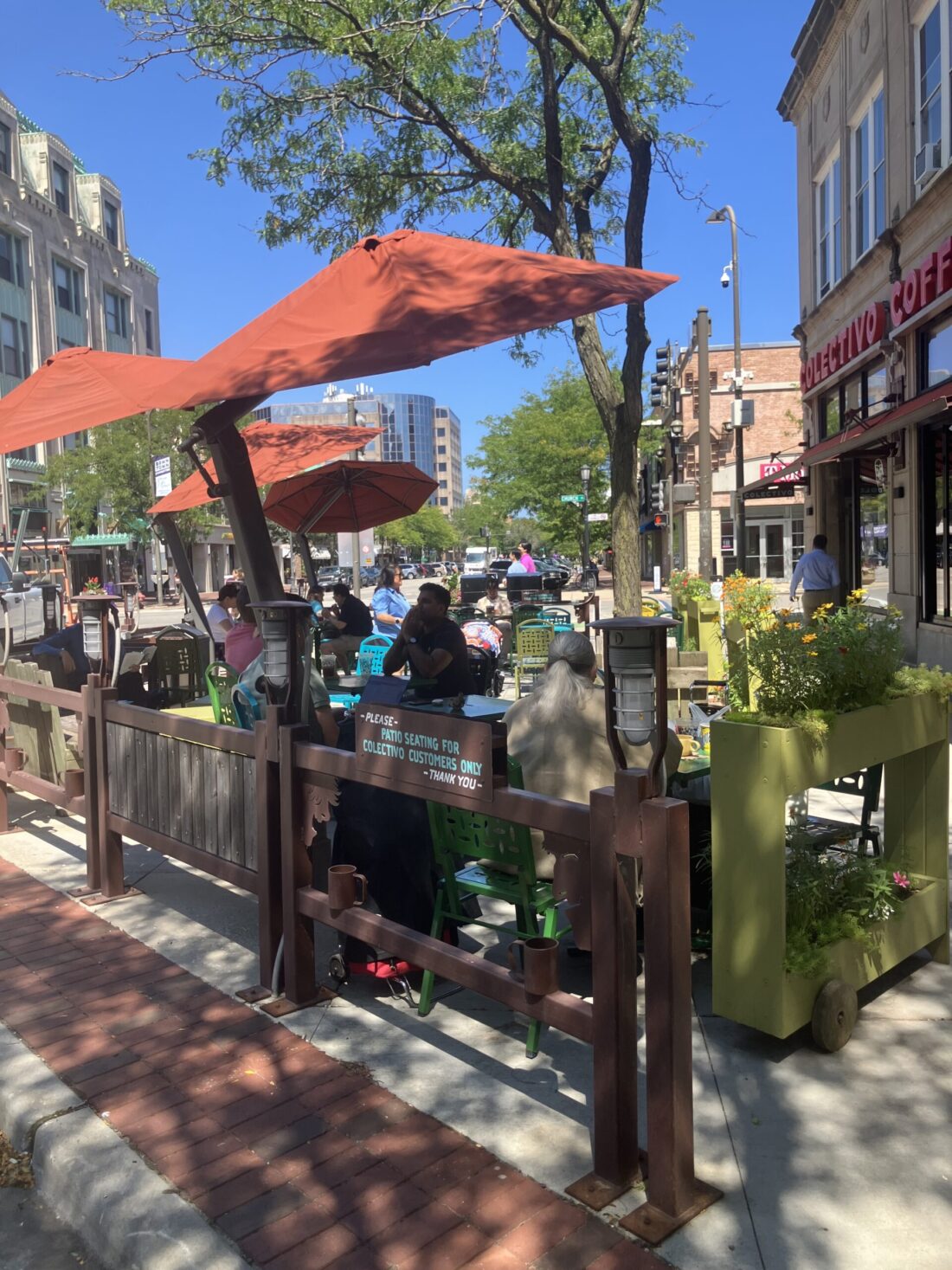
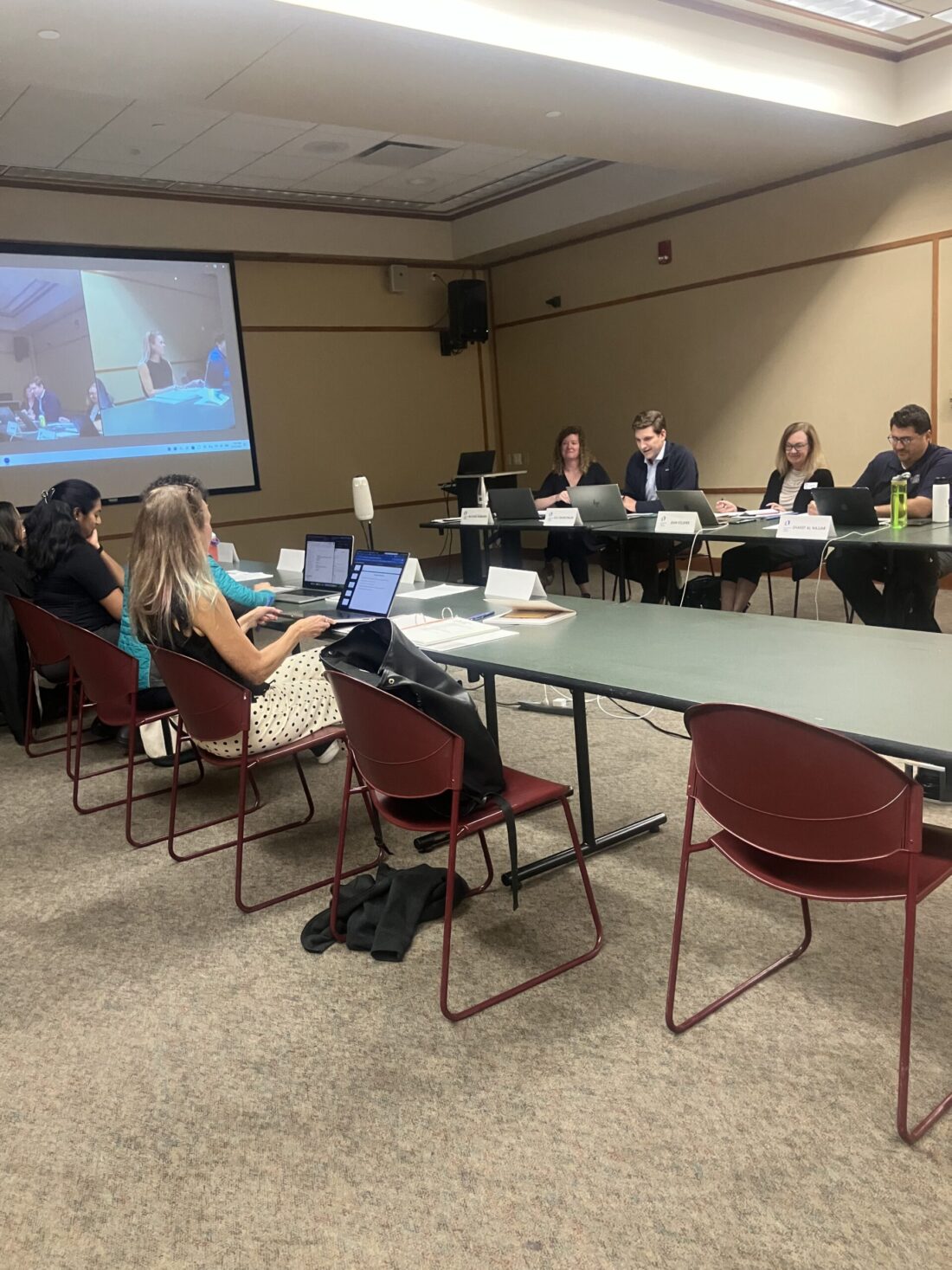
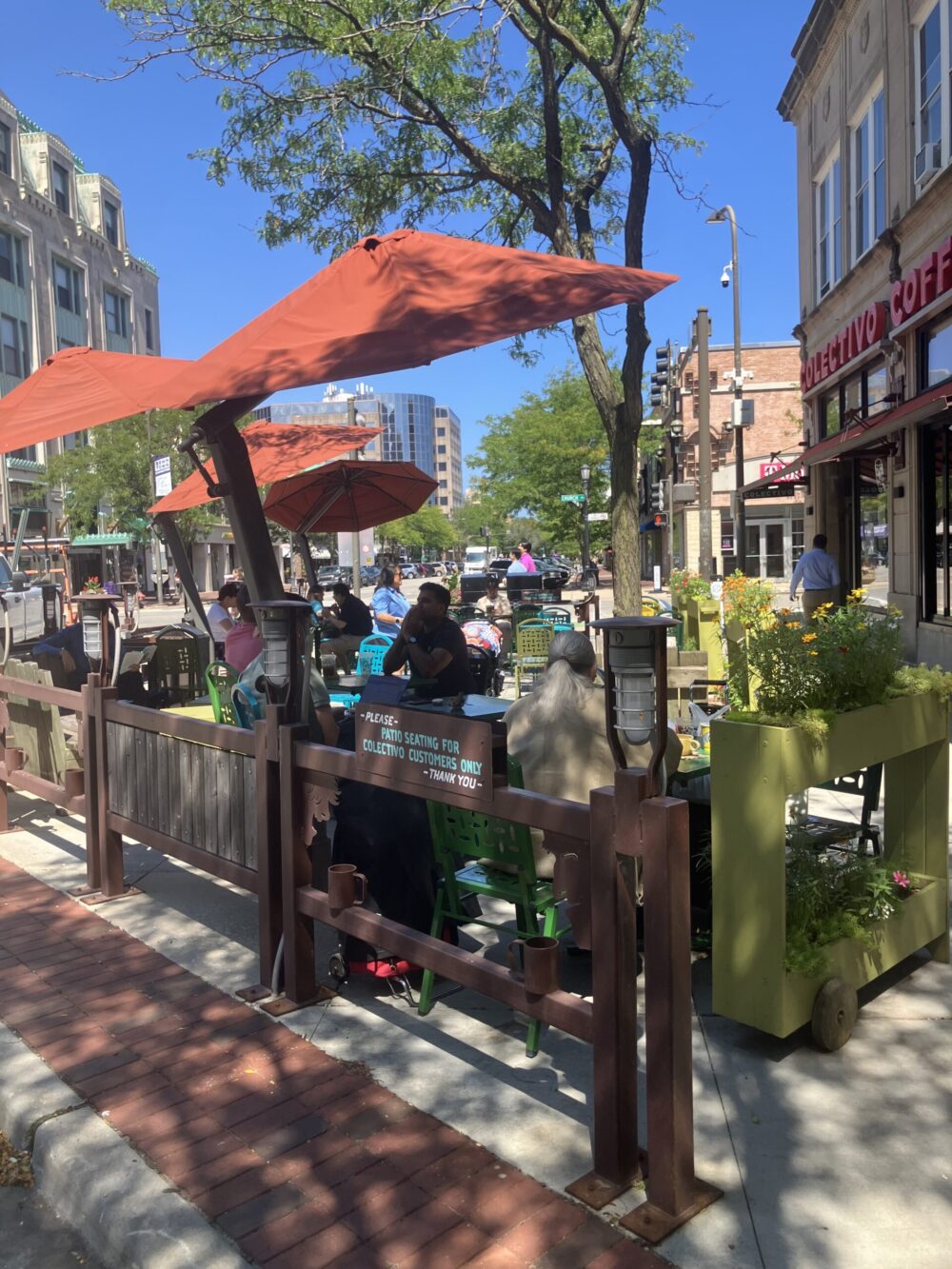
Evanston’s Economic Development Committee backed a proposal Wednesday to slash costs in half for outdoor dining cafe permits, in an effort to draw more businesses into the program and activate the city’s business districts.
EDC members voted unanimously in support of a one-year trial of the lower-cost program, wavering initially between reductions of 25% and 50%. During discussion, Chair and Councilmember Clare Kelly (1st Ward), who made the original referral for EDC to study the issue, urged the group to go with the larger reduction.
“It’s a small investment to add to activating our downtown, making it more appealing,” said Kelly, whose ward contains a portion of the downtown core district.
“I would go with zero [dollars charged], but I know that’s not a popular way to go on this,” she added. “We’re still going to be higher than the neighboring suburbs. We try it for a year — I’m going to guess that we will see more restaurants and businesses opening up cafes outdoors and really helping our business districts.”
Other members were more cautious about the potential loss of any revenue, no matter how small, with the city facing a major budget deficit and no certainty businesses will join the program even at the reduced cost.
Revenue reduction
Currently, the annual permit fee for a sidewalk cafe is $300 plus $3 per square foot, plus a $250 fee for storing outdoor furniture on city sidewalks in the winter. Based on typical footprint sizes, the average cost ranges between $1,500 and $1,800, though some have been as high as $4,000. This places “a heavy seasonal burden on independent operators,” wrote Paul Zalmezak, the city’s economic development manager, in a memo last month.
Meanwhile, neighboring communities are charging minimal costs and have been able to draw business away from the city, especially with free parking, according to a recent survey of local business owners on their concerns.
Under the proposal backed Wednesday, the city would cut annual permit costs for the smallest cafes up to 200 square feet from $350 to $175; for those between 200 and 400 square feet from $825 to $425; and for spaces over 400 square feet from $1,500 to $750.
Option prepared for committee discussion

Zalmezak noted that the changes would result in a revenue loss of approximately $20,000, though roughly $35,000 to $36,000 would still be collected from street dining and permanent cafes by the city.
During discussion, Councilmember Jonathan Nieuwsma (4th Ward) noted that when the committee last met, it recommended allocating an extra $1 million to EDC’s budget to address economic development needs, “without identifying any revenue sources, and now we’re talking about not increasing revenue but actually decreasing revenue.”
“And I would like to do all those things … I would like to be able to have reduced this [permit fees] as much as possible, but we have a financial reality we’re dealing with,” Nieuwsma said, “and we need to be able to reconcile our desires and hopes and dreams and wish list with the practical reality of how much money we have to do everything.”
He backed a suggestion by Councilmember Matt Rodgers (8th Ward) that the committee go with a 25% reduction at the start, “making life a little easier for restaurants.”

Pushing for 50%, Kelly noted “there’s lots of ways discretionary spending can be cut,” pointing to her nixing a park renovation targeted for her own ward as not necessary. Cutting fees, though, would come with a return on investment for the city, she argued.
“Not only is it tipping our hat to our small businesses, but it’s also acknowledging that we want to do what we can to increase the vibrancy of our business districts,” Kelly said.
Andy Vick, executive director of the Downtown Evanston business district, spoke to that view.
“I think if you lower the rates, you make it more attractive to encourage businesses that haven’t put outdoor dining or seating out. It’s more likely they will do it because it’s less expensive,” he said. “But I also think this is an opportunity to acknowledge that many of our businesses are having a difficult time right now, and if we can’t make a modest adjustment to the fees that they’re paying on an annual basis for those who are already doing this, I think that creates a disadvantage for those who already are doing this.”
Clarifying goals
Councilmember Tom Suffredin (6th Ward) sought further clarification on what the city was trying to accomplish, asking if it’s “our belief that by lowering this, there will be a lot of restaurants that aren’t having outdoor spaces that will, or is [it] that the same amount of restaurants will have outdoor spaces, but we’re cutting them a deal?”
“I’m sure every business would like us to reduce everything, and I’d love to do it, too,” he said. But he noted there are other factors contributing to the difficult times businesses are facing.
“If people have empty tables inside the restaurant, they’re not going to want to put four extra tables outside, I’m guessing,” he observed. “So I think, how do we tailor this to whatever we’re trying to accomplish?”
Committee member Lisa Dziekan, supporting the 50% proposal, said the signal it would send is important.
“I think signaling from this body is important to what’s happening across all of our business districts, and to me this is sending a strong signal,” she said.
Rodgers, whose ward includes the Howard Street business district, said it’s important to signal support beyond restaurants.
“If we’re really earnest about helping small businesses, let’s do it for every small business,” he said. “Let’s look at our registration fees and that sort of stuff … and not just help one type of business that we have in Evanston.”
Despite reservations, committee members ended up supporting the 50% cut in permit fees, for a one-year trial, at least.
“Anybody who’s looking to dip a toe into outdoor dining, next year is your year to do it,” Suffredin said. “Everything else will cost the same as it’s going to cost … if you have to invest in equipment and staff, I mean that part, we don’t control that. But fee-wise, if you have ever considered having outdoor space and your business announcements — next year is your year to do it.”
Sweepstakes machines
In another part of the meeting, EDC members appeared to agree on opposing new regulations, including licensing fees for sweepstakes machines now in active use in a number of convenience stores and gas station locations.
At the invitation of Rodgers, whose ward includes many of the machines, some representatives of the businesses attended the meeting and spoke of the burden they’re already under. They cited local tobacco sale regulations, particularly the banning of menthol products, inflation and other factors.
“We are really, really struggling,” said Adriana Vital, manager of A&O Amoco at 443 Asbury Ave., which has seven machines.
Minhaz Lakhani, owner of a Shell station at 2494 Oakton St. with six machines, said business has dropped 40% at the station’s store since the city banned the sale of all flavored tobacco products in March 2024.
Rodgers said the issue before them is, “do we engage with these businesses who have these machines currently that don’t seem to be creating problems in the city for residents — people are playing them, people are participating — and do it in a way that allows us to know who has them, who’s operating them, but also not getting into heavy, deep regulation?”
Suffredin suggested “leaving this as it is seems like probably the least disruptive way” to help the businesses at this time. During his time as chair, the committee and city staff took a deeper look into the challenges faced by convenience store and gas station businesses.