
Evanston ‘over the top’ compared to neighboring communities on outdoor cafe rates: Kelly
By Bob Seidenberg
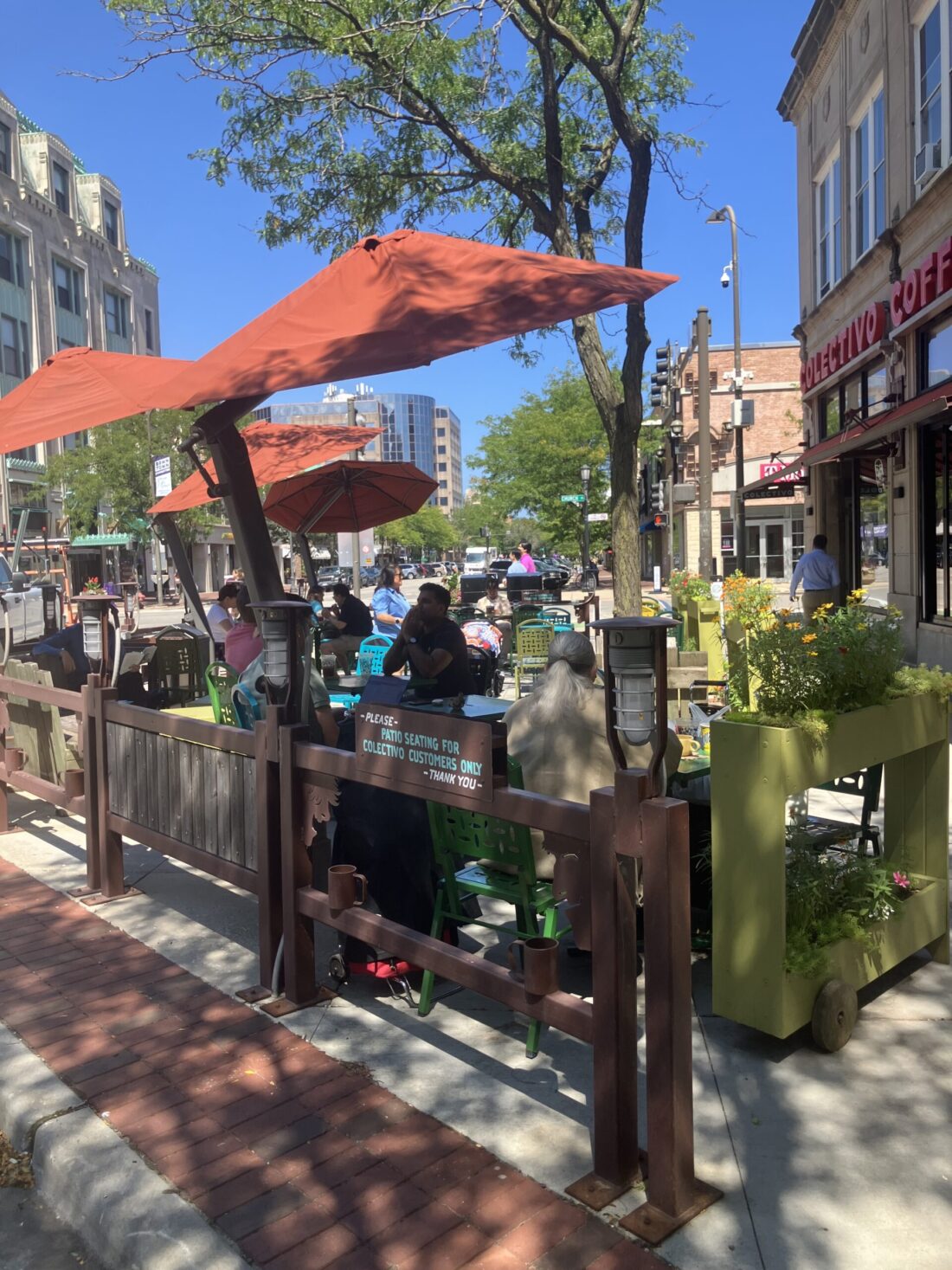
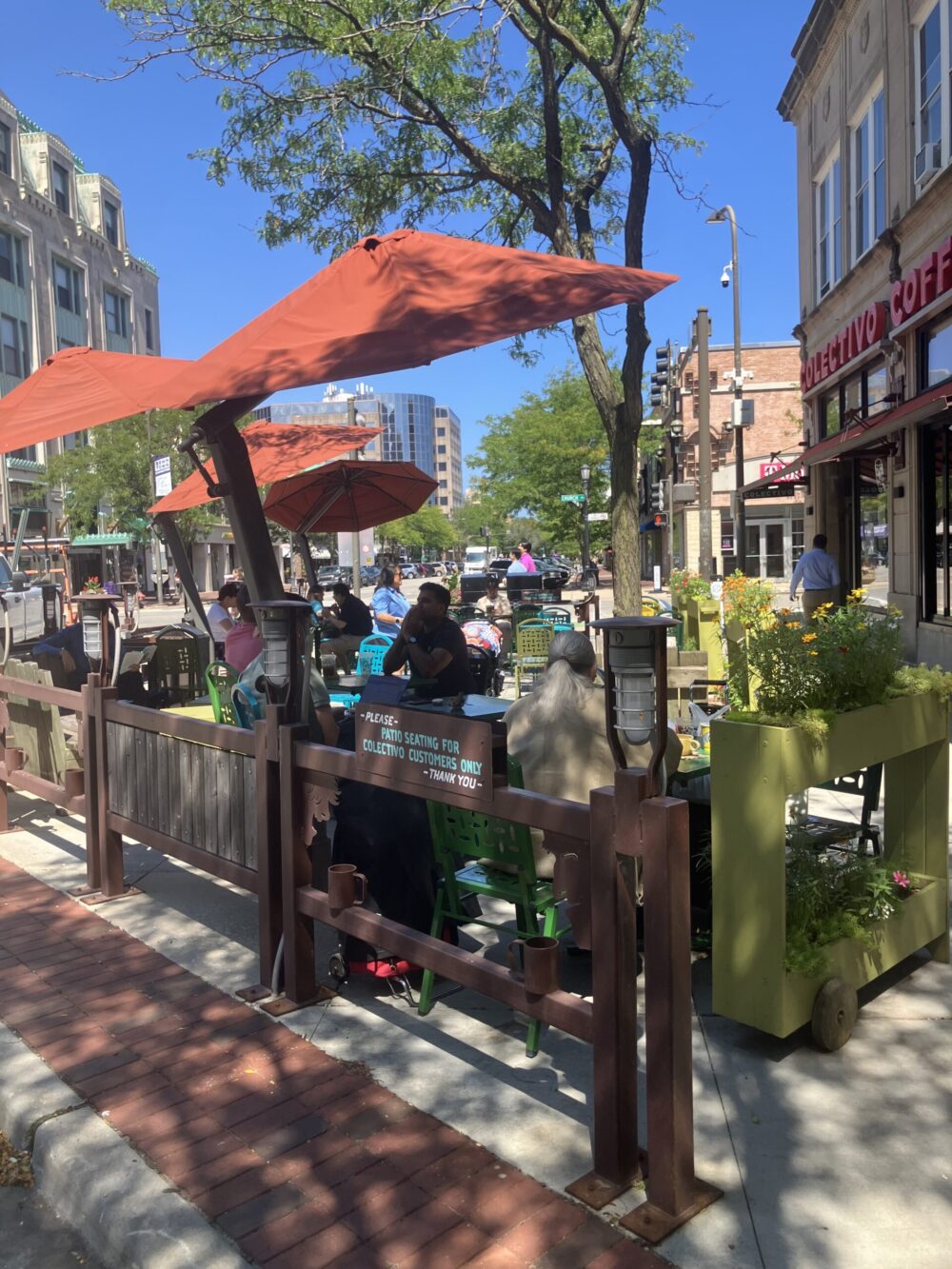
Evanston restaurants could receive a break in the permit fees they pay to operate sidewalk cafes, bringing their costs more in line with those of neighboring communities, under a proposal that received the support of the city’s Economic Development Committee (EDC) Wednesday.
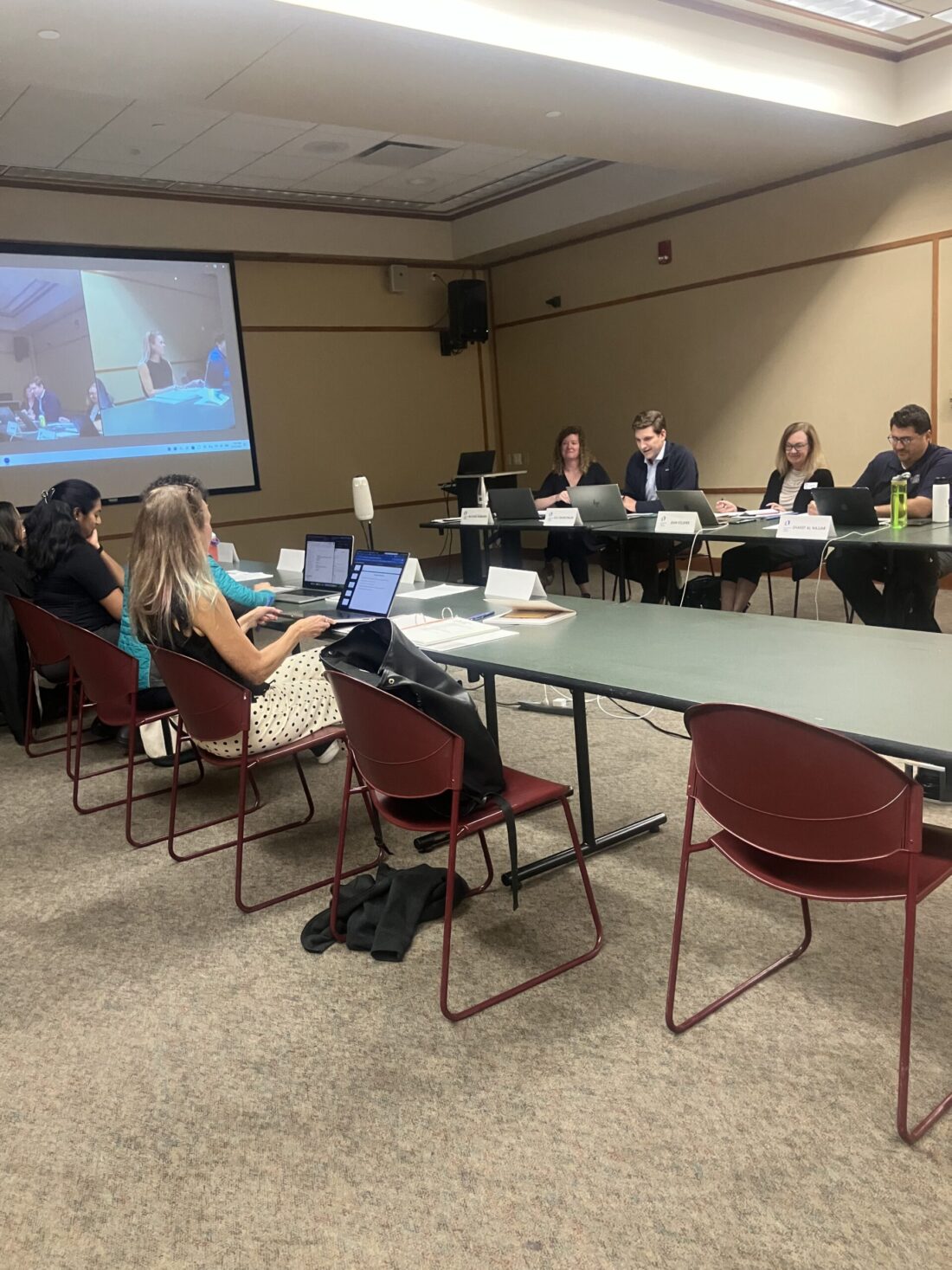
EDC members voted unanimously to direct staff to bring back fee reductions in the low, mid-level and high range to the committee at its next meeting, scheduled for Sept. 23.
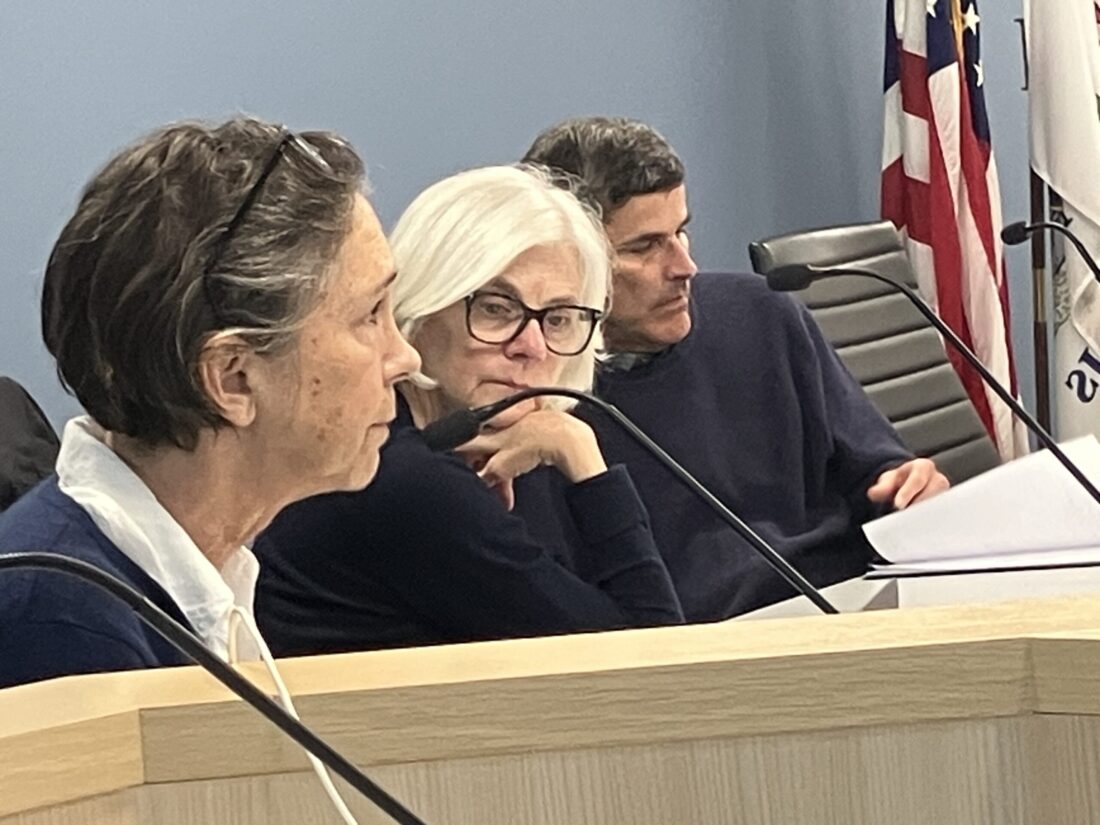
Councilmember Clare Kelly, chair of the committee, whose First Ward includes a portion of downtown, expressed hope EDC members could move as expeditiously as possible on the issue, with the outdoor dining season having only a few more months left.
“This [outdoor dining] is a huge asset for our community to have that vibrancy,” she said. “It attracts people more to Evanston, not only to spend at that particular locale, but just makes Evanston a more interesting, vibrant place.”
She said she favored a flat, across-the-board fee, similar to what other communities such as Wilmette or Arlington Heights have.
Currently, the city’s permit fee for a sidewalk cafe is $300 annually, plus a $3-per-square-foot fee for the sidewalk space and a $250 fee for winter storage of approved outdoor furniture on city sidewalks, according to a memo Paul Zalmezak, the city’s economic development manager, sent to the committee.
Based on typical footprint sizes, the average cost for an outdoor dining permit in Evanston ranges between $1,500 and $1,800 a year, “placing a heavy seasonal burden on independent operators,” he wrote.
By comparison, peer municipal fees are significantly lower, he pointed out, with Wilmette charging cafes a $50 flat fee for outdoor dining; Oak Park, a $50 annual base fee plus 50 cents per square foot; Arlington Heights, a $115 flat fee; and Naperville, $100 without liquor and $500 with it.
With some Evanston establishments paying as much as $4,000 for a permit, “we’re really way over the top in terms of these costs,” Kelly said, “and that’s because we have both the regular fee that you have to pay, then you have to pay a square footage fee, and then on top of that you’re leaving your furniture out overnight, you have to pay what we call a storage fee.”
City’s deficit a concern
Several committee members, however, expressed concern about the revenue hit the city would take — roughly $50,000 annually — if the lowest rate was adopted.
“I would love to do this, I would love to do even more, but how are we going to pay for it?” asked committee member and Fourth Ward Councilmember Jonathan Nieuwsma. “That’s the biggest question in a budget-deficit situation where we’re going to have the most difficult budget discussion at the council in the last probably six, seven years.”
Another committee member, Councilmember Parielle Davis (7th Ward), agreed that encouraging sidewalk dining should be a city goal, “but if we’re cutting costs it kind of seems like we’re just making it cheaper for the businesses that have already established that the cost is not prohibitive.”
She could see a scenario, she said, where the city might make the permit free for a business entering the program for the first year — “that way you’re encouraging new businesses without losing the revenue from the businesses that are already doing it.”
Committee member and Eighth Ward Councilmember Matt Rodgers expressed reservations about a one-fee-for-all system, noting the different streets and configurations officials take into account when granting a permit.
“We were up at Fred’s Bread [817 Noyes St.],” he pointed out, “and that’s a very narrow sidewalk that has a steep slope fairly quickly on to the street, so obviously that’s a different type of situation than somewhere like Main Street … that has a little bit of a wider street that is a little more gradual.”
“I also think there is something about we are renting public space to these people to store stuff, and if they have to chain everything up in front of the building, you are potentially impeding part of the public way, and so there is something for a rental fee.”
Kelly agreed that there can be conversation about how new regulations and the costs of a revamped program look. “But I don’t want to see us bogged down into too many meetings. Our small businesses are hurting.”
The discussion was the latest in a number of initiatives the committee has been examining to improve Evanston’s small business districts.
Proposed EDC budget hike to meet initiatives
At Wednesday’s meeting, EDC members approved staff’s recommendation for an additional $1 million in EDC’s initiatives budget, supporting enhanced support for business district improvements (increasing from $100,000 to $200,000), entrepreneurship support ($100,000 to $250,000) and storefront modernization ($0 to $500,000). Committee member Lisa Dziekan made the motion on behalf of the committee for the proposal to go to City Council, which will have final say on the budget.
Budget officials have not identified a funding source for the request, with any spending plan incorporated into other requests for funding, Zalmezak said. “It will be evaluated alongside other strategies to ensure a balanced budget.”