






By Bob Seidenberg
An early retirement incentive and voluntary separation program for city employees — two major initiatives city staff had proposed to reduce a daunting $12 million deficit in the 2027 budget — are likely off the table, but a widespread reorganization of how city services are delivered is not.
City Finance & Budget Committee members voted unanimously Wednesday to recommend neither program be pursued, opting instead to endorse another staff initiative — identifying savings “through optimization of service delivery, review of budgeted positions and programming,” which could lead to the long-term possibility “of insourcing/outsourcing services where cost savings are possible,” according to staff materials presented during Wednesday’s meeting.
At a previous committee meeting, budget staff floated the ideas of an early retirement initiative and voluntary separation program as among the cost-cutting ideas they planned to present to the council as the budget season draws near. City Manager Luke Stowe typically publishes his proposed budget in the first week of October, kicking off the annual budget process that ends with City Council adopting a final version, usually before Thanksgiving.
Next year’s budget is projected to have a structural deficit of around $12 million according to Clayton Black, the city’s deputy chief financial officer. Councilmembers have been able to close similar deficits in the past by drawing down reserves and tapping one-time revenues, especially federal American Rescue Plan Act funding and permit fees from large building projects like the rebuild of Ryan Field.
Staff salary and benefits make up 80% of spending in the city’s General Fund, and so any deep budget cuts to close the structural deficit would likely have to occur there. Officials estimated up to 102 employees could receive the early retirement incentive through the Illinois Municipal Retirement Fund, which excludes police and fire personnel with separate pension funds. Another 142 would qualify for the voluntary separation program, which would include police and fire.
For the retirement program, employees would have the option of buying up to five years of service by paying 4.5% of their annual compensation per year of service. Thus, a 50-year-old employee with 20 years of experience could buy five service years and retire early, drawing from their IMRF pension as though they had 25 service years.
Depending on how many employees would pursue the opportunity, savings would approach $2 million in the first year of the program and $500,000 in ensuing years in saved salaries and benefits, according to staff.
Close look at staffing needed first
In discussion, several committee members indicated they weren’t ready for the proposal and would rather give the plans a deeper look after the budget season.
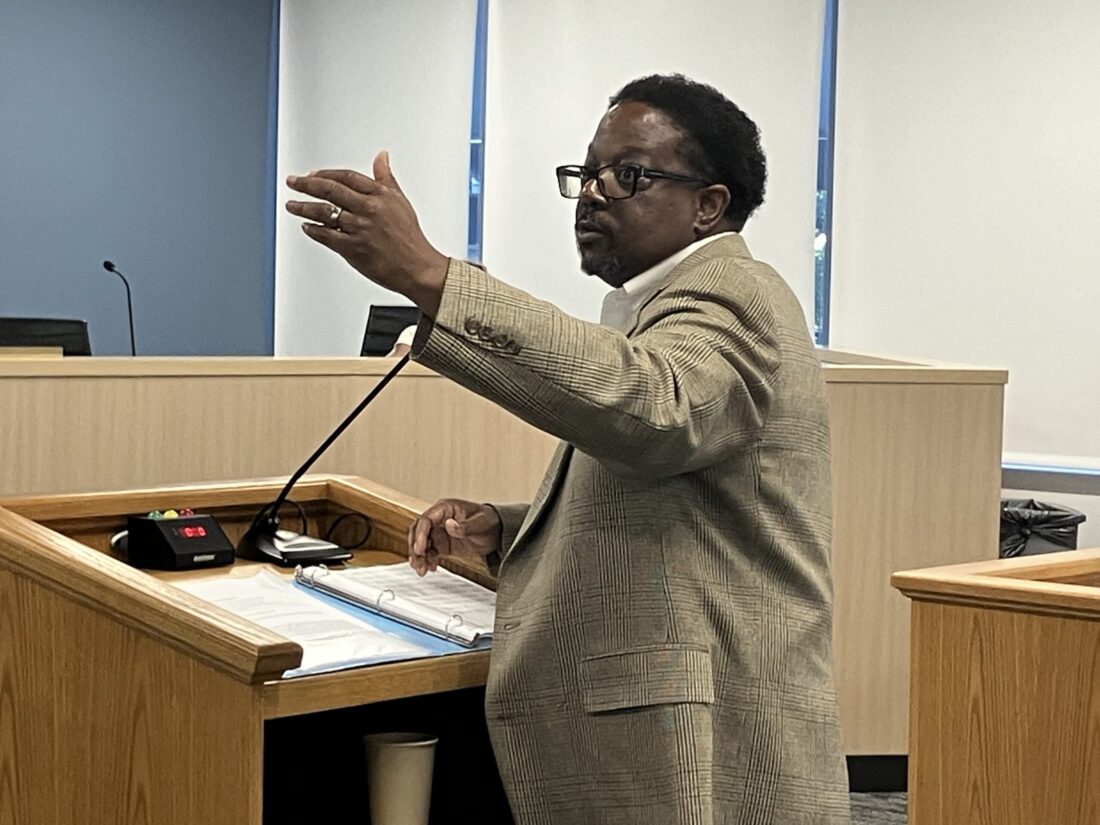
Councilmember Clare Kelly (1st Ward) opened discussion by arguing the city needs to really do the hard work at looking at our staffing and determining which positions we could remove, and I think this [the early retirement proposal] would preempt that.”
She noted large-scale retirements, like those in the city’s last similar program in 2007, caused “a pretty certain degree of disruptive mess,” with the city not having control over how many of its nearly 800 employees chose to leave.
Close to 60 employees left in 2007, including a number of senior department members, leading some councilmembers to question the plan at the time.
Councilmember Matt Rodgers (8th Ward), chairing the meeting, also said he was not in favor of moving forward with the early retirement or voluntary separation ideas at this time, expressing concern “it gets us away from doing the real work of evaluating staff.”
Further, “if we start offering exit programs, we’re dealing with the staff that’s leftover, not the staff that we have, and making sure we’re positioning people correctly,” he said.
He said he would support the committee taking another look at a voluntary separation program in March or April “if we aren’t achieving the goals that we’re looking at,” he said. Shortly after this, the committee voted 6-0 to recommend against pursuing either program in the 2027 budget. They will still advance to City Council for final decisions, but with four councilmembers on the committee voting against them Wednesday night, it appears likely they will also fail at the full council.
Northwestern fire tax, video gaming among revenue ideas
Rodgers and other committee members showed greater interest in several other ideas on staff’s list, such as legalizing and taxing video gaming and charging Northwestern University a fire service tax, that didn’t get off the ground in previous budgets.
Revenue and expenditure items on staff’s list include the following:

- Food and beverage tax — a 1% tax on all food and beverage sales, while converting the existing 6% liquor tax into a 2% packaged liquor tax. Estimated revenue: $1 million.
- Transportation network provider tax — hiking the tax on Uber, Lyft and other providers from 20 cents to 40 cents per ride, an amount still lower than Chicago’s $1.13/ride tax. Estimated revenue: $1 million.
- Streaming tax — increasing the streaming fee from 5% to 10%, in line with Chicago’s tax. Estimated revenue: $1 million.
- Northwestern fire service charge — Officials would work with Northwestern for an annual contribution for fire services “in line with many other university communities,” officials said in their memo. Former Councilmember Devon Reid (8th Ward) resurrected the issue — which dates back to the “Fair Share” battles of the 1980s — during another difficult budget several years ago, but it never got off the ground. Estimated revenue: $750,000.
- Video gaming — Legalizing video gaming terminals and taxing their revenue. Estimated annual revenue: $300,000.
- Property tax increase — Councilmembers have largely avoided moving in this direction in past budgets. Revenues from an increase could be used in the General Fund, General Assistance Fund or to reduce debt service payments, staff noted in their memo. The amount of revenue generated would depend on the size of the levy hike.
Meanwhile, the city may be looking at a major rate hike for water use, officials confirmed in a separate discussion.
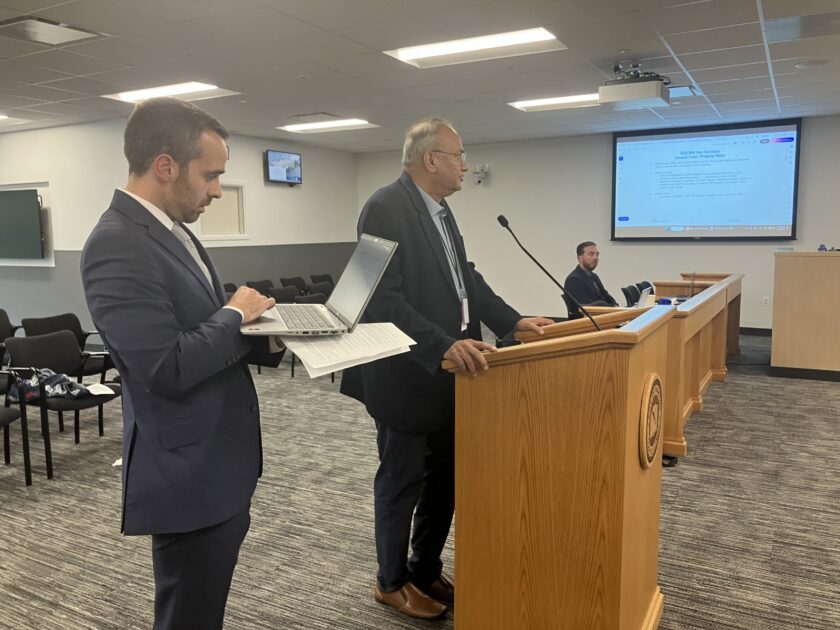
“The Water Fund faces significant financial pressures, primarily from the city’s aging water distribution system,” said Darrel King, Evanston’s water production bureau chief, in a presentation to the committee.
Officials held off on a plan to borrow $17.6 million through general obligation bonds in 2026 to fund capital projects, which include replacing water mains and lead service lines. As a result, the city’s original financial plan to hike the water rate by 10% to help meet costs will not be sufficient.
Staff put forward three scenarios with rate hikes of 10%, 25% and 50%, depending on how much in interest-supported long-term bond borrowing councilmembers would be willing to support.
“A couple of years ago, the City Council authorized staff to start doubling the amount of water main” work done each year, King said, “so that by 2042 approximately, we won’t have 30 miles of water main that’s 121 years old or older.”
Based on average annual residential usage, the average annual bill for water and sewer service would increase from $1,199.92 in 2026 to $1,277.24 in 2027 under a 10% hike. Under a 50% hike, the average 2027 bill would jump to $1,586.52.
Councilmember Kelly noted that in past years, the city has transferred $4 million in revenues from the water fund into the city’s General Fund, which covers basic city services. She said the city should reexamine that practice and keep that money in the water fund, noting that about 70 residential units had their water shut off because of failure to make payments.
“Most of those were single-family homes — 48 single-family homes, a 20-unit multifamily home and one commercial unit,” she said.
“So you know that’s a lot of units that had the water shut off after you warned them,” she told King, underlining her concern about higher costs.