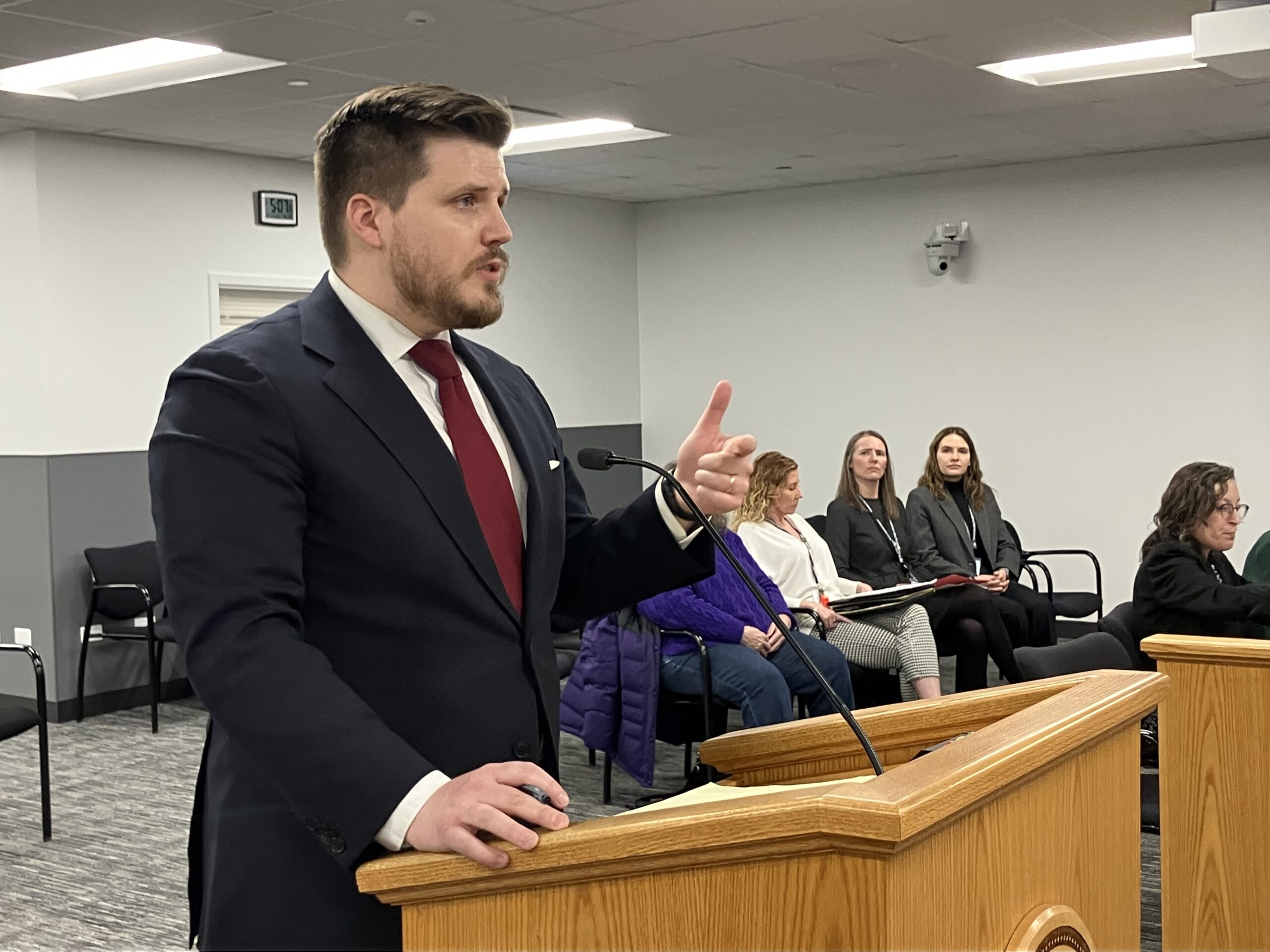
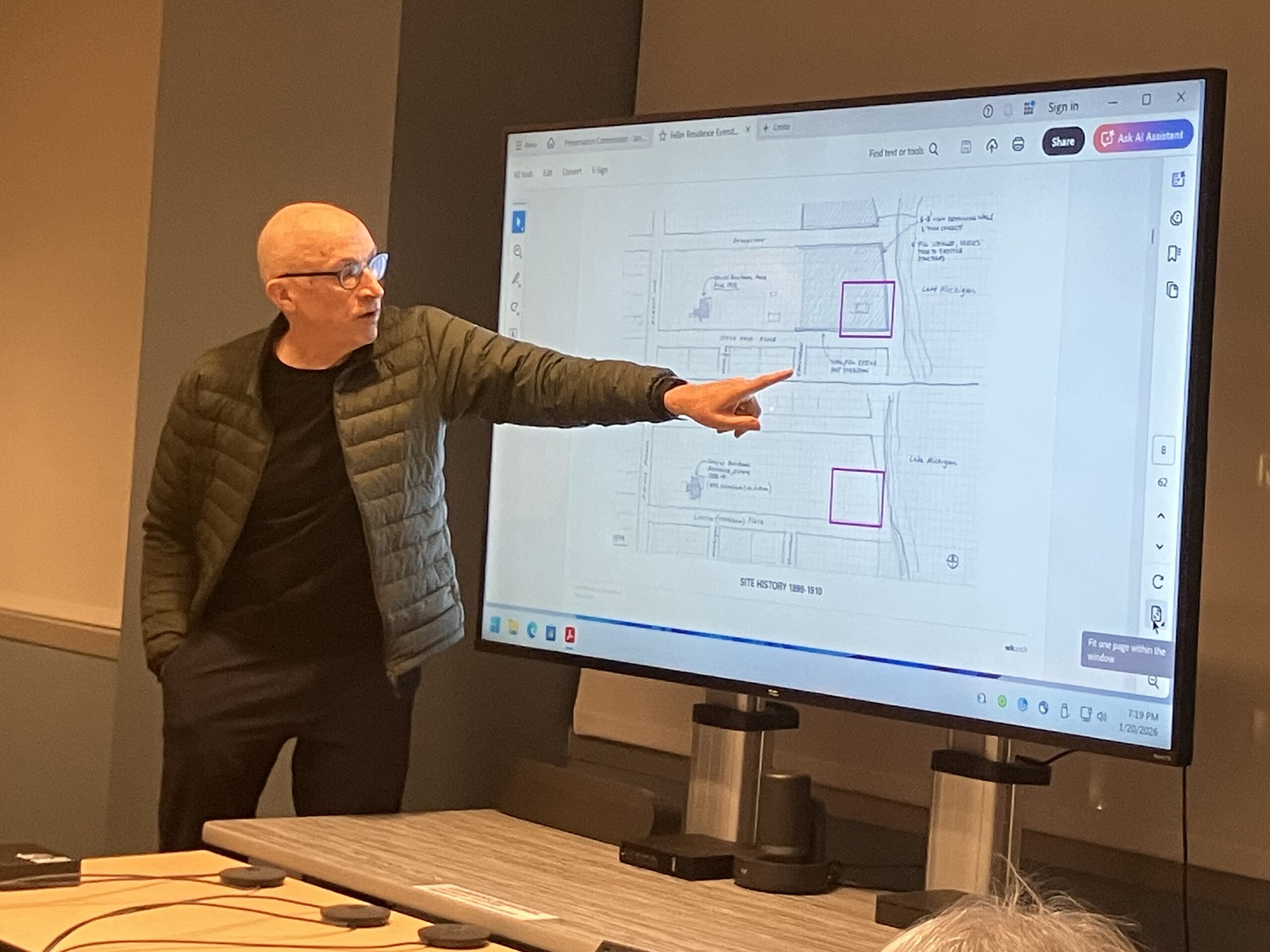
Library trustees, still in the information-gathering phase, directed Meristem President James Rachlin, who gave a presentation to the board
In a statement emailed early Thursday, Evanston Mayor Daniel Biss said he opposes separation. “Splitting off the library would be bad for patrons, bad for library programming and services, and bad for workers,” Biss said.
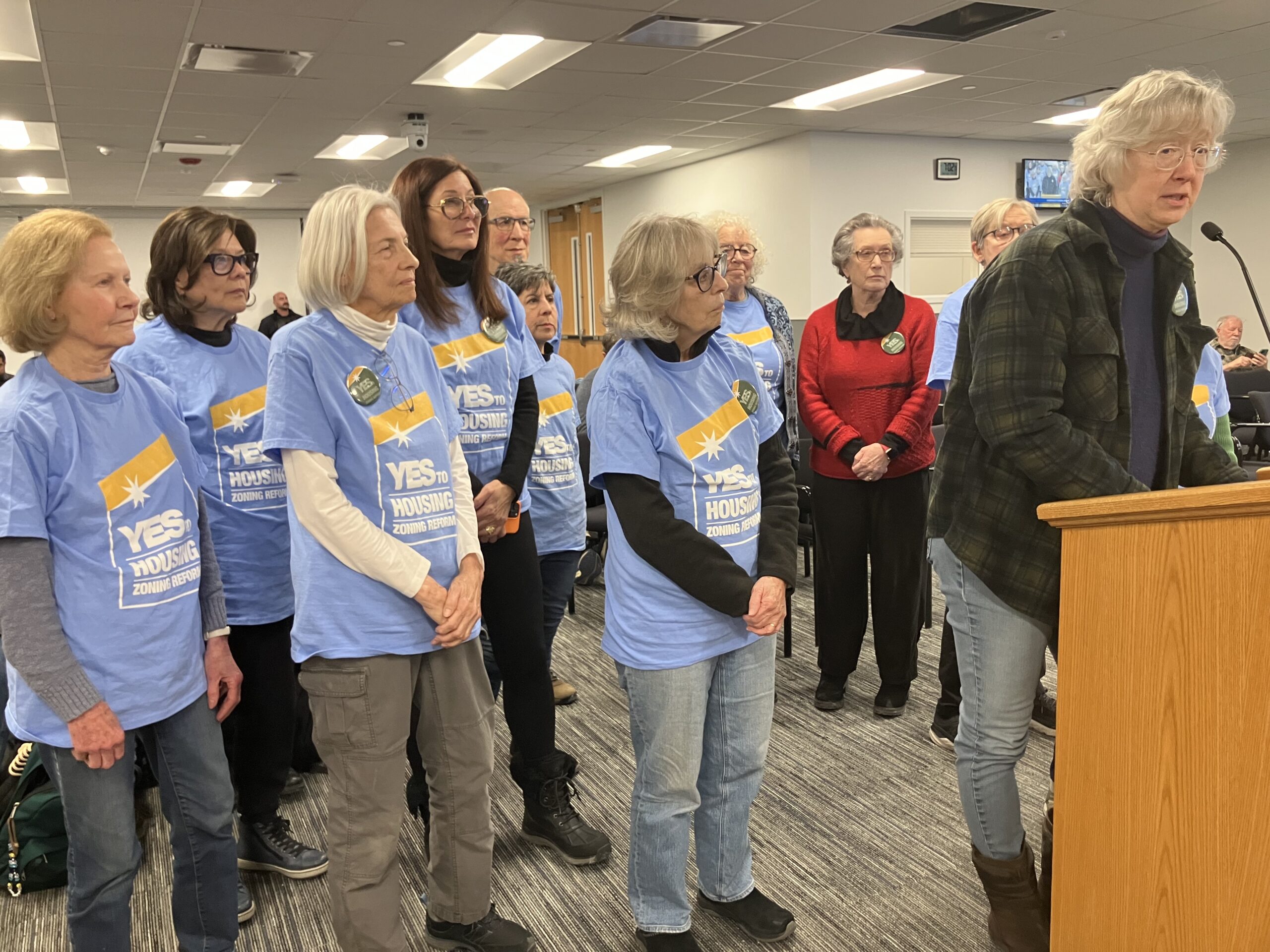
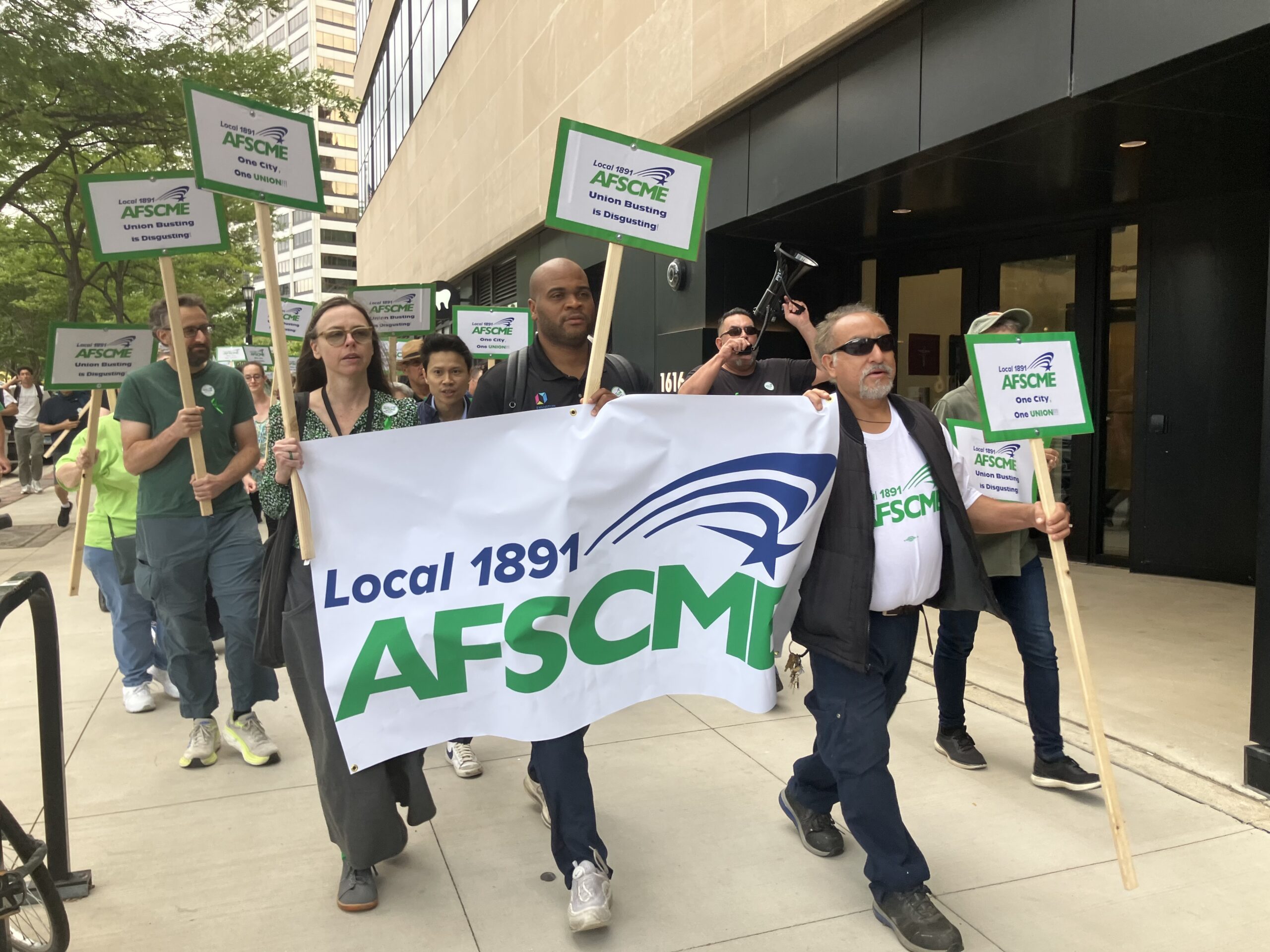
Several other public officials — State Senator Laura Fine (D-9th), Illinois State Rep. Hoan Huynh (D-13th) and First Ward Councilmember Clare Kelly — stood with workers at the rally in Fountain Square.
“These workers are the backbone of the city of Evanston and I was proud to stand in solidarity with them,” Fine, like Biss running for Congress in the Ninth District, wrote in a Facebook post.
“Libraries shaped my own education, and they remain centers of equity, access and opportunity,” Huynh wrote in an Instagram post. “We can’t let privatization threaten services or workers’ rights.”
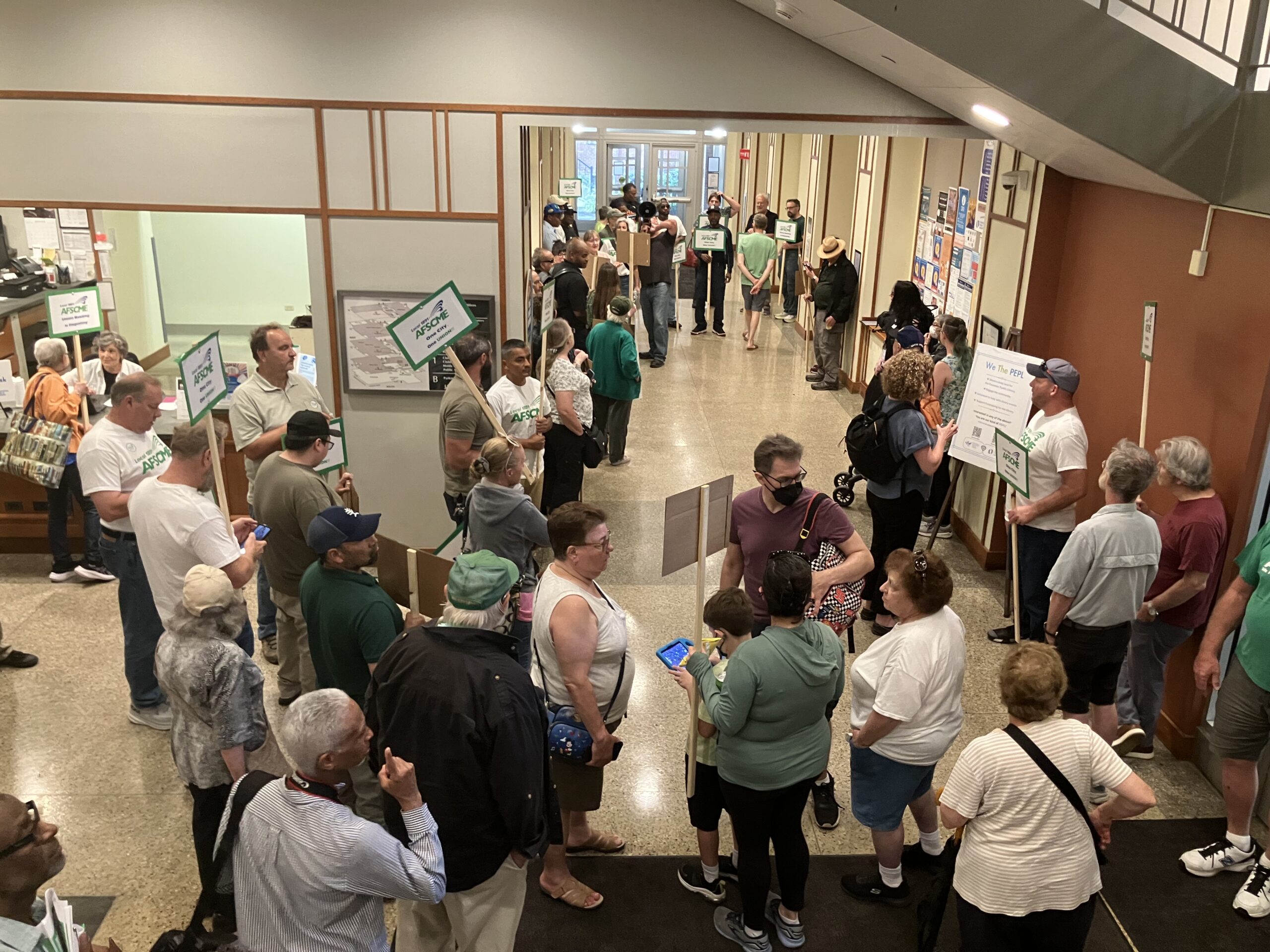
Kelly, who also spoke during the public comment portion of the Library Board meeting. She stressed the city’s commitment to ensure Evanston is a city “where people desire to work, that it’s a city that treats every employe with fairness, dignity and respect.”
Wednesday’s rally represented AFSCME’s first full-blown public response to the idea of separation. The union represents close to 400 city workers, most from Public Works and about 75 from the Library.
Library gets $1M in services for $350,000, union leader says
In her remarks to trustees, O’Neil warned that a plan to separate could drive up costs to the library for infrastructure and services now provided by the city, and could cause a loss of jobs and services, opening the door to privatization schemes.
“This plan would potentially force cuts to library services that are beloved to the public,” she said. Currently, the city provides the library with payroll, legal, human resources, snow removal, and HVAC, plumbing and electrical engineering services, as well as providing two city-owned buildings and free parking to staff and board members, O’Neil said.
Eileen O’Neil, president of AFSCME Local 189, addressed workers before they marched to the Library Board’s meeting. “This plan would potentially force cuts to library services that are beloved to the public. “Those are city buildings [and] services supported by all of our members across the entire city with a value of over $1 million — well over $1 million — annually that we, the library, only pays $350,000 for [under its memorandum of understanding with the city]. Why does the city give the library such a good deal? Why does the city give the library such a good bang for the buck?” O’Neil said. “Because we’re partners, we’re a family. We’re here for the community and the patrons. We are one city and one union.”
Union steward raises specter of ‘union busting’ Another speaker, Legal Literacy Librarian Lorena Neal, the AFSCME library steward, took time to rebut what she described as mistaken presumptions in the Aug. 6 Meristem presentation to the board.
“The presentation assumed staff support on the basis that a separation would provide the opportunity to negotiate library-specific provisions in our contract, apart from other city workers,” Neal said. “However, the existing contract already has several sections that are specific to the library as negotiated by library management and library union representatives.
“The library has always had a seat at the contract negotiating table,” she said, “and there is no need to divide and weaken our union for this to continue. Assertions to the contrary are union busting, plain and simple.”
She said an assertion at the meeting that library employees would favor a split from the city because of more schedule flexibility was also untrue.
Talk of lower wages ‘obviously an unpopular idea’
“Our current union contract with the city already allows our library employees the opportunity to adjust our schedules as programming needs arise through shift differential and overtime pay,” Neal said.
Librarian Lorena Neal, a steward with the union, said: “The concept of receiving lower wages than other city workers going forward is obviously an unpopular idea among library staff.” “The flex time proposed in the presentation is just another way of saying time and wages stolen from library employees,” she said to applause from the audience. “Our staff and community would be better served if the library were to pay an extra few dollars.”
That money could go “to support programming at times convenient for [the] community,” she said, “instead of spending $50,000 on a consultant to tell you how to pay library staff less.”
”I must be clear,” stressed Neal, “one of the chief selling points in this proposal was that the library would be able to pay library workers less by breaking us away from the rest of the city as a union,” she said, quoting from consultant James Rachlin’s presentation (responding to trustees’ questions) that the pay scale after the change would likely entail a lower escalation rate.
“The concept of receiving lower wages than other city workers going forward is obviously an unpopular idea among library staff,” Neal said.
“The presentation also posited that library workers would prefer having library-only HR staff, and deemed relying on city HR, quote, ‘problematic,’” she said.
“Again, this is an incorrect perception of the library staff’s preferences, even if we were to accept the premise that it is somehow problematic for library staff who have to send an email or dial a four-digit extension number or walk the three whole blocks to City Hall to speak with city HR directly,” Neal said. “The sheer number of grievances the union has had to file over library scheduling changes, unhealthy workplace environment, complaints and wrongful termination should give you some indication of why library workers prefer to deal with the citywide HR staff that is not beholden to any single director or department.”
Library pays for, but doesn’t own, its facilities
Neither Wilburn nor the board responded directly to the comments raised during the public comment session, including O’Neil’s call for trustees to vote against any separation move.
But after most of the audience had cleared out, board members did make references to the issues that led them to consider separation during their discussion of other items on their agenda.
The library is continuing to pay off debt (with a $576,949 payment in 2025, including $206,606 in interest) on a bond it has been paying since 2013 for upgrades the library made to its since-closed North Branch Library, which was owned by the city, noted trustee Michelle Mills, who heads up the board’s financial committee.
Additionally, Robert Crown is another branch the library doesn’t own, “but we paid millions of dollars to create that space and to be part of the group of people that went together to make sure Robert Crown got built for city services that are all there together, but needed the library money there,” she said.
Another almost $700,000 expense for a sewer repair in front of the city-owned building came out of the library’s capital improvement fund.
Board President Tracy Fulce, briefing new trustees, pointed out that because “of the structure of our relationship [with the city], the library can’t take on its own bonds. We have to do it through the city. And so, if we don’t own the building, and we can’t take out a loan, but then we … are responsible for its upkeep and maintenance.”
Asking questions not disloyalty, board president says In her president’s report, Fulce spoke specifically to “the governance evaluation process that we’re undertaking to determine whether EPL should be made a municipal library or transition to a district library.”
“Tonight, members of the union and neighbors showed up because libraries matter, and I’m honestly, really grateful for that, and I want to be clear about what we’re doing and the why of it,” she said. “Transitioning is not a foregone conclusion. There’s no vote tonight, but we’re doing what good boards do — which is gathering facts, weighing fiscal stewardship, ensuring our community, our patrons and staff are well served and inviting public input.
“And over the past few years, we’ve wrestled with some changes, some challenges that really deserve rigorous examination, and asking questions is not disloyalty. That is what stewardship is.”
“It’s not about being anti-union or anti-worker,” Fulce said. “As a union member myself, for nearly 20 years, I respect the right to protest, and I hear the concerns, the voices of our staff and lawful representation will remain central in bargaining good faith with whatever representatives employees choose.”
Board President Tracy Fulce (right): “We value or partners but we owe our community an honest assessment of what structure best serves Evanston.” Separation ‘more complex issue than it may seem’
Fulce said library leaders “owe our community an honest assessment of what structure best serves Evanston.”
“I know that some folks can be worried or angry because they’ve heard different things from different audiences,” she continued, “but our commitment as a board is to continue aligning this process with our strategic priorities outlined in our strategic plan, including empowering community engagement, lifelong learning for all, optimizing resources responsibly, nurturing relationships and partnerships and growing together.”
The board evaluates costs and accountability and working conditions, and will continue to communicate each step clearly, she said.
“This is a much more complex issue than it may seem on a placard or text message or post on Facebook,” Fulce said. “We owe it to our community to be thoughtful, conscientious and considerate and not make decisions based on sound bytes.”