
By Bob Seidenberg
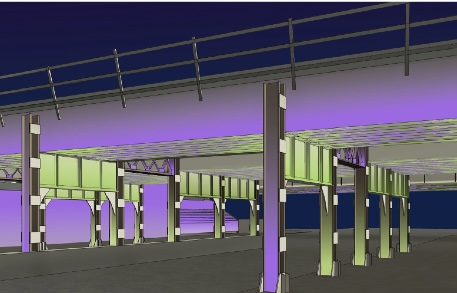
The city’s Economic Development Committee voted Wednesday to recommend how the city should spend its last remaining federal COVID funds earmarked for implementing the Evanston Thrives action plan, directing the money to lights for a downtown train bridge, placemaking installation at two business plazas and prep work for future installations.
The city received about $43 million in federal American Rescue Plan Act funds, starting in 2021, to speed recovery from the impact of COVID, and $3 million was allocated for Thrives initiatives. Less than $1 million of that is still unspent, and the city has until the end of the year to spend it and finish all work on a qualified project or else risk returning the money to the federal government.
In a voice vote, committee members unanimously recommended that the city split the remaining $934,579.34 between artistic lighting for the Church Street Metra bridge and several other projects. Staff will write up the full recommendation for approval by the City Council at its Nov. 9 meeting.
Some members, including Councilmember Clare Kelly (1st Ward), who chairs the committee, expressed concern about having to make a decision at the 11th hour.
“I’m just concerned that we’re under the gun so we’re going to spend a million dollars,” she said. “But I guess we don’t have a choice because we’re under the gun, so I guess that’s my point of frustration.”
Economic development staff expressed frustration, too. Officials originally eyed nine train bridges for artistic lighting installations when they began drawing up plans for the Thrives money. As costs came in, officials realized they would have to narrow their list down to just four, said Paul Zalmezak, the city’s economic development director. Two of those could be covered by tax increment financing (TIF) funds, he said, leaving the other two at Church and Davis streets as candidates for the ARPA funds.
Getting approval from Union Pacific for the bridge projects has been “a very extensive process,” Katie Boden, the city’s economic development coordinator, told committee members, “and it took a significant amount of this time just going back and forth with them what kind of things they would allow, and then just waiting for their approval.”
Staff gave committee members several scenarios for spending the remaining funds:
- Option A would use all of the $934,579.34 available to add artistic lighting to the Davis Street bridge ($491,678.50) and Church Street bridge ($446,975), requiring an extra $4,074.16 to cover leftover costs. This would leave no ARPA money for design and plaza improvements, one of the priorities in Evanston Thrives.
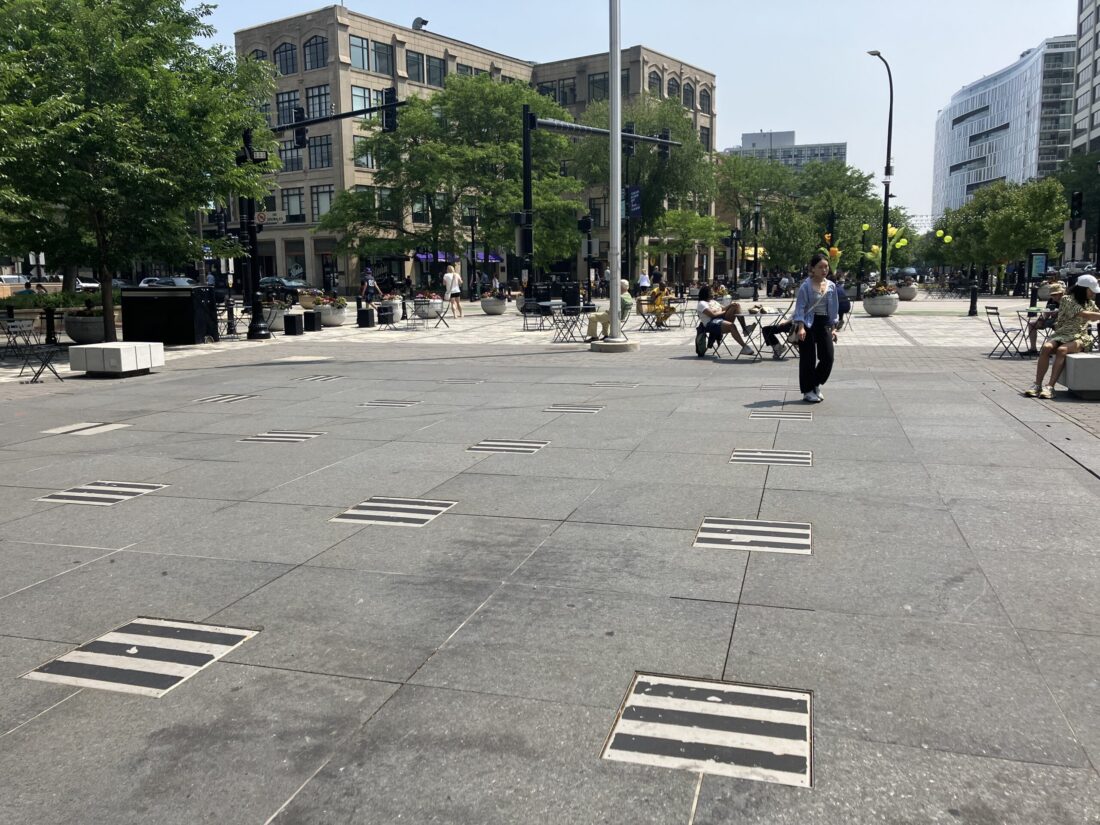
- Option B would drop the Davis Street bridge, and spend the money on the Church Street bridge lighting and placemaking installation costs for Callan Plaza at Howard Street and Callan Avenue ($245,000) and City Center Plaza around City Hall at 909 Davis St. ($45,000). It would also put $254,750 toward a bundle of the Thrives plan’s “design packages,” covering planning work for multiple projects that could be executed in the future. This option would need an extra $57,145.66 from other sources.
- Option C, which Councilmember Matt Rodgers (8th Ward) amended, would be the same as Option B minus the design packages, leaving $197,604.34 left over to use on other projects.
Committee members swung between Options B and C during discussion.
Rodgers stressed the need to include Callan Plaza. The city has already invested $225,000 from the Howard and Ridge TIF (tax increment financing) district in that area, he said, suggesting that ARPA money could have been used without tapping TIF funds, which can be used for a wide number of purposes in a redevelopment.
Davis Street Metra tunnel cleanup, too
Rodgers’ amendment to Option C directed spending the remaining $197,604.34 on just two of the “design package” projects, covering the Ashland Arts district in the Fifth Ward and the City Center Plaza. The latter project includes improvements to the Davis Street Metra station’s pedestrian tunnel, including cleanup and paint scraping ahead of bigger work in the future.
Committee member Cheryl Judice, owner of Hecky’s, has been voicing concern about that area almost since she joined the committee.
“I said, one of my first concerns was how Evanston looks for outsiders coming into our town, and there’s nothing worse, or at least or less inviting, than the Church Street bridge area,” she said.
In discussion, Acting Mayor Jonathan Nieuwsma (4th Ward) and Andy Vick, executive director of Downtown Evanston, which markets the downtown district, spoke in support of the improvements.
“As the councilmember for the portion of downtown that includes both of these bridges,” Nieuwsma said, “I would love to make that a better experience for business downtown, especially the Church Street Bridge, given Northlight Theatre and the presence of that as an economic driver for downtown.”
Support for a ‘showpiece bridge’
Vick acknowledged “it seems frankly unfair to me that we wouldn’t … move some of this money into other parts of the community and other projects.”
At the same time, “I think creating a showpiece bridge in downtown at a key gateway is a good thing for this entire community,” he said. “People are going to want to talk about it, they’re going to want to see it, they’re going to want to visit Evanston, not just downtown but all parts of it and I think then we set a standard that we could try to replicate in the future if resources are there.”
With so many moving pieces around the proposal, Zalmezak said, staff’s plan is to bring the committee’s recommendation to the full City Council at its Nov. 9 meeting.
“So we need to quickly pivot,” he said.