



By Bob Seidenberg
Evanston Preservation Commission members have received an update about the condition and vacancy status of several Northwestern University-owned properties in response to a walking tour the group took of the properties Aug. 20 in the city’s Northeast Historic District, looking into neighbors’ concerns.
At the meeting, Klein read from an email sent by Dave Davis, the university’s senior executive director for neighborhood and community relations, in response to the commission’s survey of the properties.
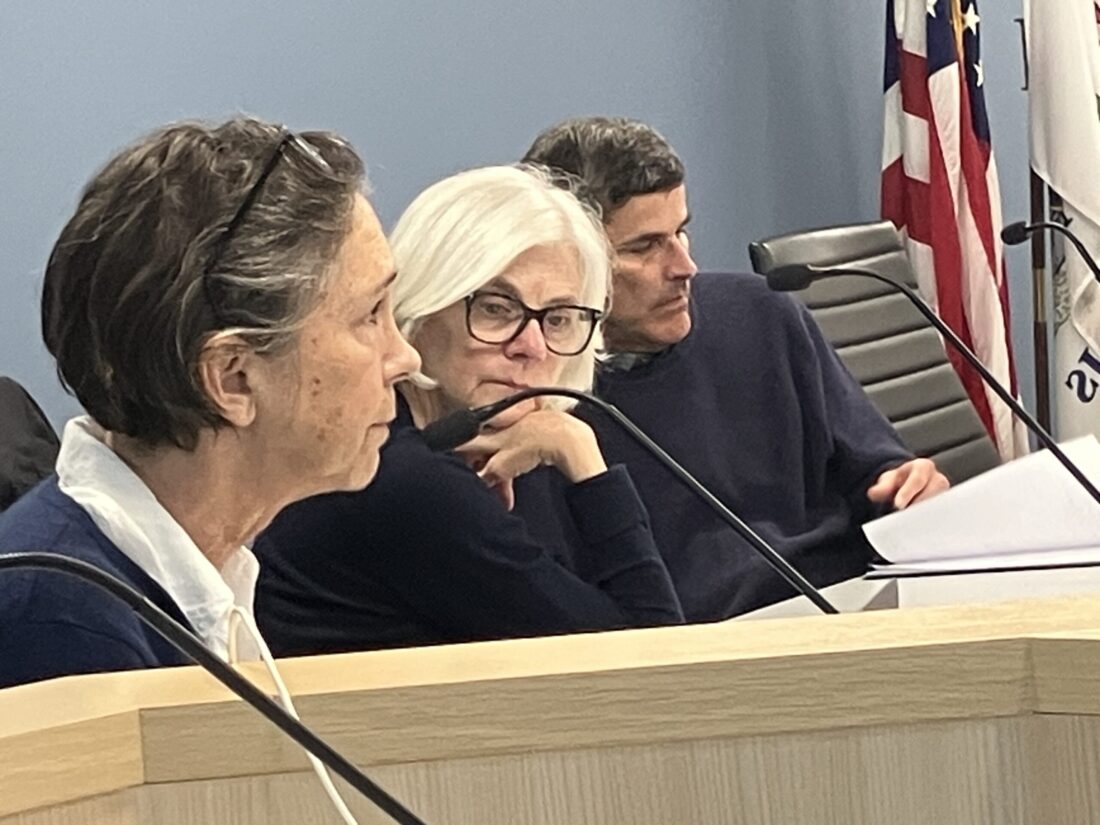
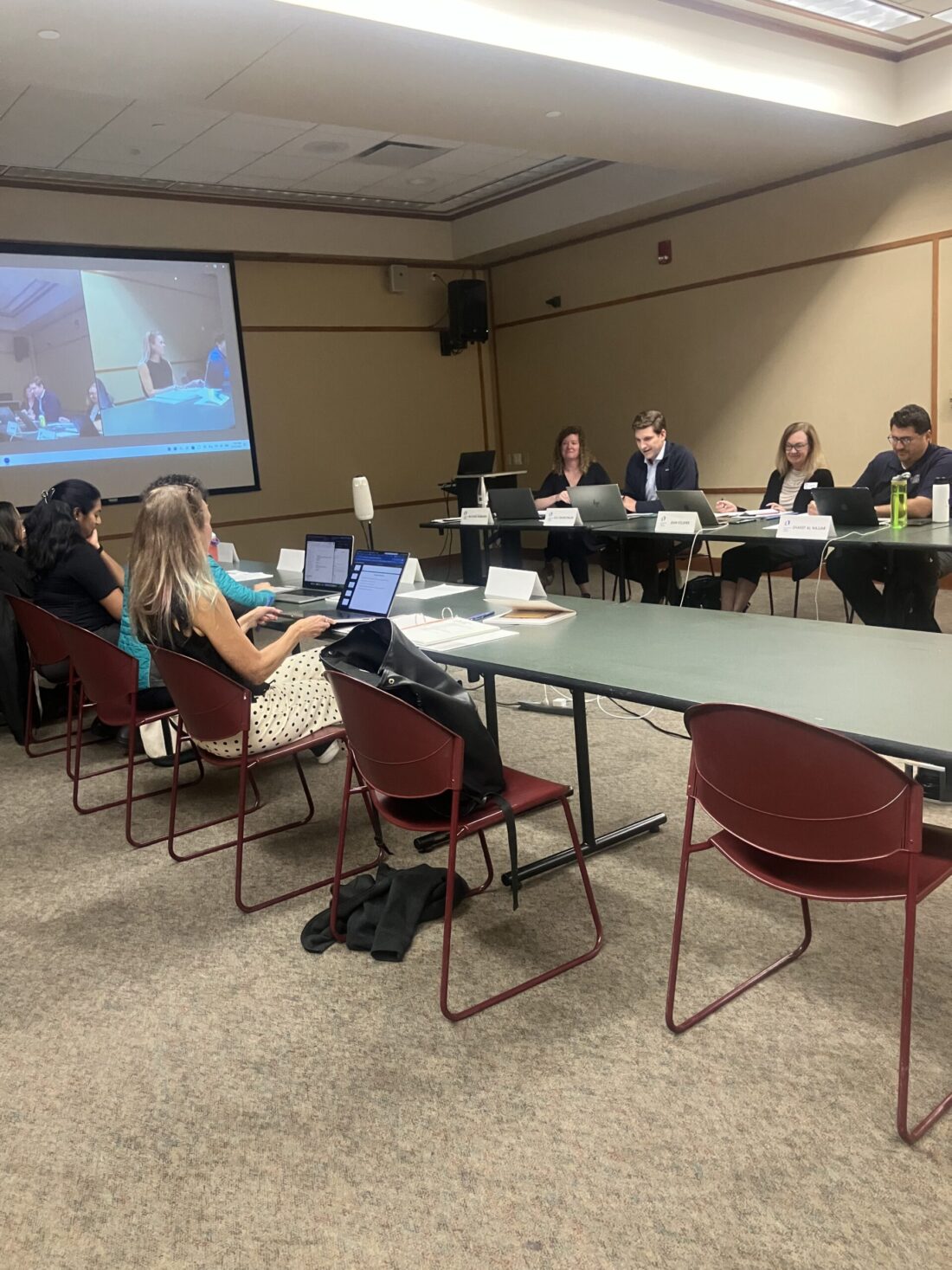
But the citizens group — established by city code to promote an effective preservation program — is awaiting word from Northwestern about the vacancy status of several buildings, noted Carl Klein, commission chair, during brief discussion of the issue near the end of Wednesday’s regular meeting.

Klein expressed hope the commission could use the fact-finding survey to come up with possibilities for maintaining the buildings, working with the university on a maintenance plan.
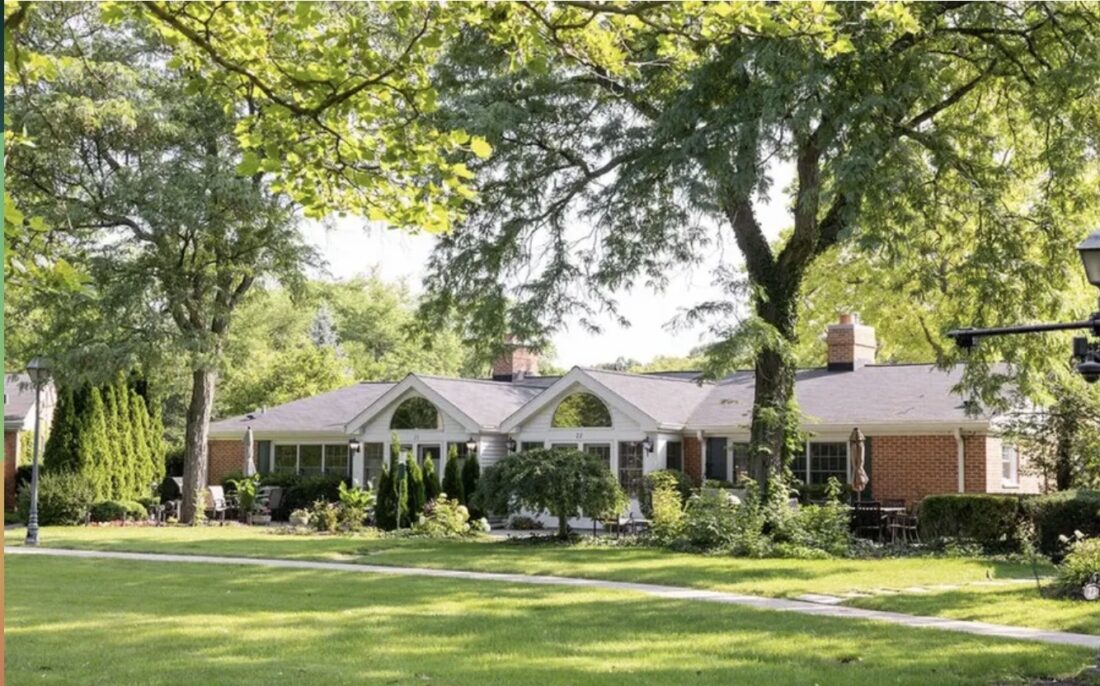
Davis’ email pointed out that all permitted work at one of the properties — 629 Haven St. — is complete, “including protective treatment to exterior trim, roofwork, gutters, and yard maintenance.”
(A city spreadsheet of the projects made available Monday, before Davis’ report, had indicated roof work was still to be done.)
“The contractor has demobilized, and site preparation is complete. Grass seed is being planted to repair disrupted areas of the yard. Northwestern will continue to maintain this building and site as it does other vacant properties, per the filed maintenance plans.”
The property at 640 Lincoln St., the former Roycemore School, a landmark property, “is not vacant,” he continued. “It is being used for parts and material storage, and university operations support. Since receiving the city’s citations, Northwestern has made select repairs to concrete gutters and downspouts, as well as addressing rubbish cleanup and landscape maintenance.”
The university has applied for all relevant permits, which are currently under review, he said. “Northwestern is evaluating the condition of foundation walls in preparation for tuck pointing in select areas as required. Northwestern has engaged a contractor to install roof tarping on the Roycemore School for the winter, at the recommendation of members of this commission and the city inspector, the permit is still under review by the city.”
Klein said, however, two university buildings closer to downtown and outside the Northeast Historic District where the tour was focused, are not registered as vacant and therefore there is no obligation on the part of the university to file a maintenance plan.
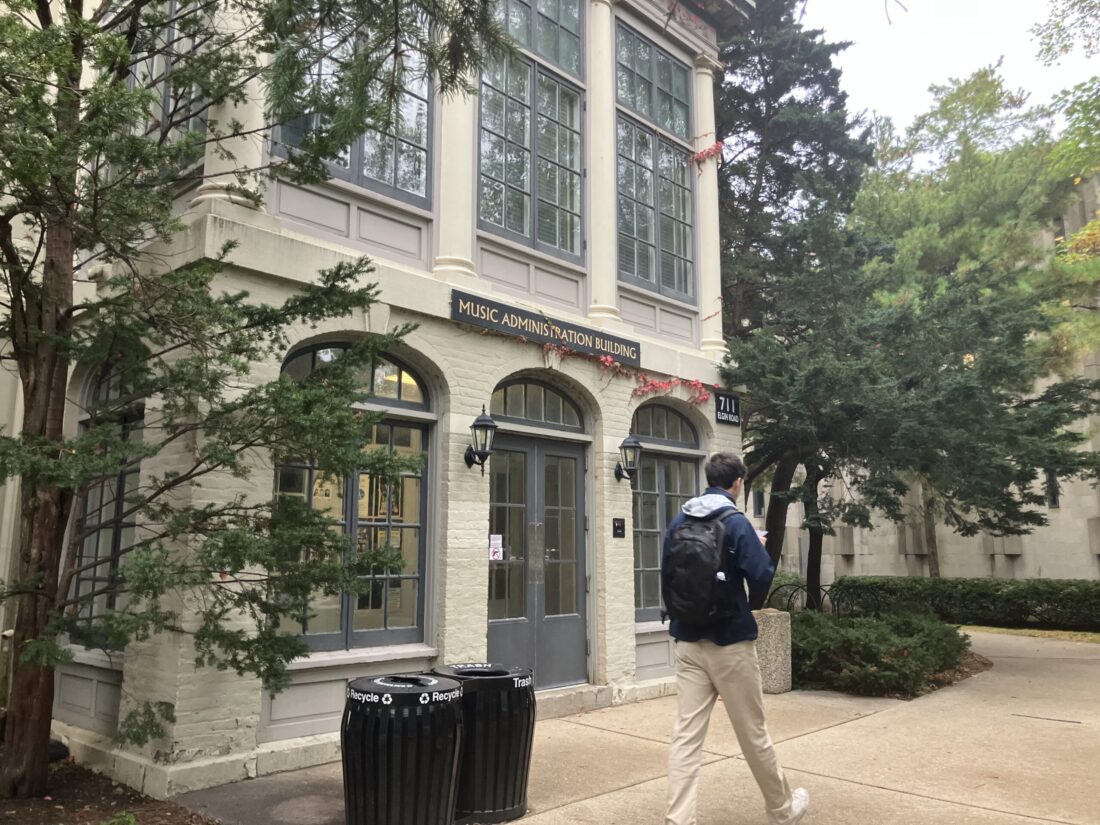
The two buildings in question are Northwestern’s former Music Administration Building at 711 Elgin Road, which NU vacated in 2015; and the nearby practice hall known as The Beehive at 1823 Sherman Ave.
The music building was built in 1874, originally as a women’s dormitory/college building known as Willard Hall and is a landmark, “and to allow a major institution in town to neglect these buildings … we can’t wait for them to come to us and say we’ve decided it’s vacant,” Klein said.
Elizabeth Williams, planning manager for the city sitting in at the meeting, asked commission members if there were specific steps they would like to see and offered to share any documentation the city has on file.
Klein suggested that it would be nice to see the maintenance records for the two buildings, to help set in motion the process of declaring them vacant.
At the Monday Planning & Development Committee meeting, Councilmember Clare Kelly, in whose First Ward the properties are located, was joined by Councilmember Parielle Davis, whose Seventh Ward also includes a part of the university district.
“Once it becomes vacant, a city can’t stand by and look and wonder if it’s vacant,” Kelly argued.
In Northwestern’s case, 25 notices had gone out to the university, about “over 40 different problems, such as large gaping holes in roofs — to paint chipping, to electrical wires hanging on the house,” Kelly maintained.
The first notices date back to August of 2025, “and some of those went out numerous times,” Kelly said.
“I’d like to see Northwestern accountable, starting the date of violations from the first notice,” she said. “What other resident gets 25 notices and doesn’t get fined except for the last little stretch, couple weeks?”
Councilmember Davis noted that the last time councilmembers had talked about the issue, she had raised concern about the city’s handling of vacancy issues.
“I do think from a point of compassion, I can stand for us to be lenient about property maintenance violations,” she said. ”But if someone’s not in a house … if you don’t live in that place — give it to someone else. It was suggested at some point that there were other homes that we weren’t being aggressive about, and I want to know: Have we found out that there were other vacant homes that we weren’t being aggressive about? Do we have any other suspicions? Have we established any practices?”
Responding at the Monday meeting, Andrew San Roman, the city’s building and development services manager, said when it comes to vacant buildings, the city does enforce the ordinance.
”At the same time we have limited resources,” he said. “At the moment we have three property maintenance inspectors. We have over 15,000 rental properties that are occupied that we have to inspect, so we have focused on the occupied properties and property maintenance violations, rental inspections as well.
”So we have not placed much focus on vacant buildings … the honest truth … due to limited resources.”
Councilmember Matt Rodgers (8th Ward) suggested that the issue might be “how do we enforce a non-response as a response?”
Right now, he said, “we just kind of keep sending letters trying to get them [property owners], trying to get an inspection scheduled.”
Councilmember Bobby Burns (5th Ward) maintained that some “people may not even know that the vacancy requirement exists, and so to go back two years and say now you have pay every day seems unnecessarily punitive.”
San Roman pointed out, “We often try to work with property owners to try and get compliance first before we go to citations. We try to do that first so it’s not an automatic, ‘You don’t show up, we’re issuing a citation.’ We try to work with them first.”
Kelly maintained that Chapter 16 of the city code, relating to vacancies, should be adhered to.
Code’s plan of action
The code prescribes a plan of action with a time schedule, identifying the dates of commencement and completion of all actions required to achieve habitability, she said.
The code is clear, she argued, “that the onus is on the property owner to declare, to register your property as vacant,” she said.
“Once it becomes vacant, a city can’t stand by and look and wonder if it’s vacant,” she said.
All those details should be recorded with the city, “and I have yet to see those,” she said. “And obviously the neighbors would like see those, too, to understand what’s going with the properties in their neighborhood.”
But Burns noted at the Monday meeting that while the chapter cited by Kelly does say the property owner is required to register after two years of vacancy, “nowhere in there does it say that the fines can start.”
Kelly maintained a strong vacancy code, which the city has, is important because of the negative impact of vacant properties on neighborhoods.
“They can destabilize neighborhoods, create safety and maintenance concerns, diminish property values and also long-term vacancies mean lost opportunities for housing and we’re talking a lot of vacant properties here,” she said. Further, the cases ought to be brought to circuit, rather than the city’s administrative adjudication, court, where they are heard now, she argued.