
By Bob Seidenberg
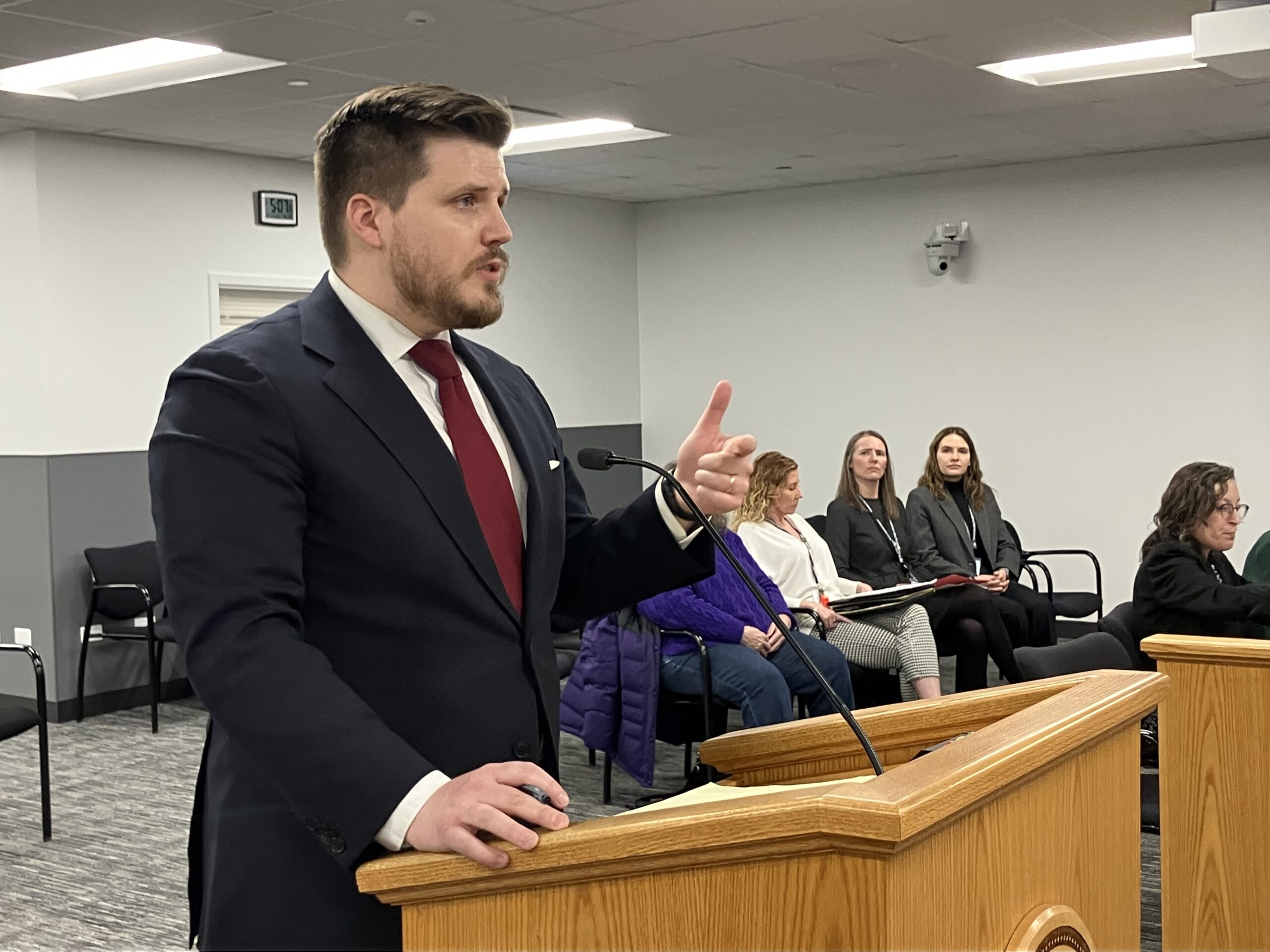
A city committee took steps Monday night to amend an ordinance that Evanston has had in place for decades to combat aggressive panhandling.
Members of the Human Services Committee voted unanimously to amend sections of the city’s panhandling ordinance, responding to staff concerns of potential constitutional defects.
The issue next moves to the full council for deliberation and a final vote.
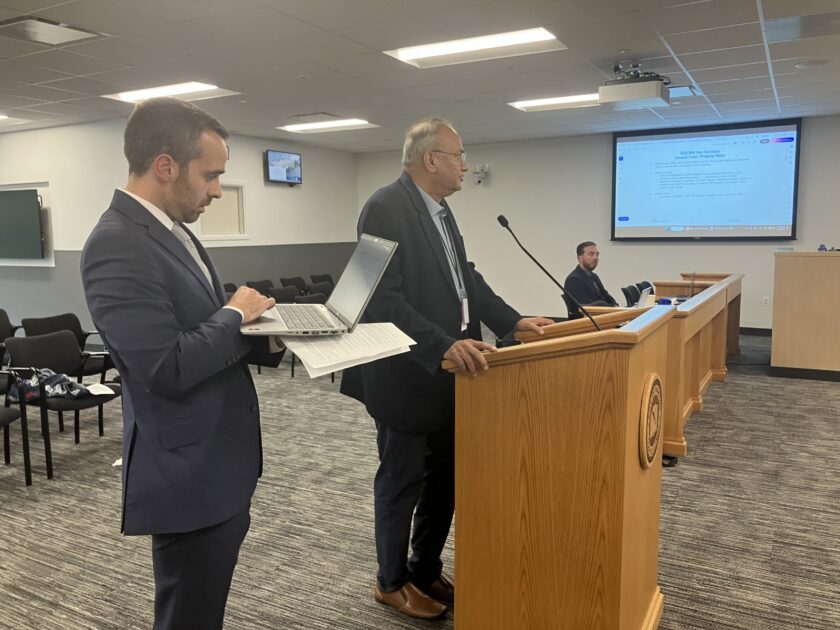
The city has received two “demand letters” — one from the ACLU of Illinois and the Coalition to End Homeless and the second from a pest control company that makes door-to door sales — identifying potential constitutional problems with the city’s existing ordinances on peddling, soliciting and panhandling. Liza Roberson-Young, the city’s Chief Legislative Policy Advisor, told committee members before the vote.
“Courts have held that requesting money is a form of speech protected by the First Amendment,” Roberson-Young said in her presentation and memo, “and have therefore struck down local laws that specifically target panhandling and solicitation.”
Meanwhile, a number of municipalities in Illinois, including Chicago, Champaign, Urbana, Peoria, Carbondale and Oak Park, have made similar changes, she said.
She said the proposed ordinance, which eliminates any language related to aggressive panhandling, is intended to address potential constitutional language and mitigate the City’s liability risks
Further, Roberson-Young said her understanding is that “this ordinance is very rarely enforced currently,” and that if situations do arise, staff’s expectation that they’ll be addressed by the city’s new care team, referring to the Crisis Alternative Response Evanston (CARE) program.
The program, launched in July 2024, employs a civilian team to provide a non-police response to what are considered low risk service calls.
“The building up of the CARE team has really changed the way we approach this as community,” she said.
Ordinance has a long history
The city has had in place ordinances with language outlawing aggressive panhandling since 2001 — with officials concerns dating nearly a decade before that, concerning the negative impact of panhandling on the city’s business climate.
“There are many beggars downtown,” said one speaker at a hearing during that time, “and they come, so to speak, ‘into your face. You go to Wilmette and there are no beggars. You go to Winnetka and there are no beggars. You go to Old Orchard and there are no beggars.”
Panhandlers could be charged with violations if “before, during or after their request,”they touch the solicited person without his or her consent, block the path of a person being solicited, solicit near an automatic teller machine, direct “profane or abusive language” at the person being solicited.
Committee members look for other ways to address the issue
In discussion several Human Services Committee members while supporting the change, expressed hope some alternatives would be developed to address aggressive behavior.
Councilmember Jonathan Nieuwsma, 4th, whose ward includes portions of downtown as well as the Main-Dempster district, told committee members that “I’m sure I share concerns that many of you have about making sure our commercial districts are warm and welcoming for visitors and residents. So I would hope that there is a better way we can address the underlying constitutional interests than striking this section in its entirety.”
Both councilmembers Juan Geracaris, 9th, chairing the meeting, and councilmemberMatt Rodgers, 8th, expressed hope that Evanston police would weigh in on the issue with suggestions before the issue goes to the council for a final vote.
Councilmember Shawn Iles, 3rd, familiar with the many of the panhandlers in his job of director of Interfaith Action’s overnight shelter, said he agreed that the city shouldn’t “spend our time or resources litigating something that we’re vulnerable for on this issue.”
“But I did find it interesting the suggestion that perhaps we find another way way to deal with behavior that’s unacceptable sometimes, because we do need to revitalize our downtown and part of the reason that some people are afraid to come downtown is because they’re not comfortable because of the panhandling.”
Protection against Trump administration militarization
Earlier, during the public comment portion of the meeting, Kyle Voils,, senior attorney for the Chicago Coalition to End Homelessness, saluted the committee on the direction they were going, “protecting the individual rights and civil liberties of our vulnerable community members.”
“Many such folks are subjected to unlawful government actions and invalid laws merely because they lack the resources — financial, time, informational, otherwise, to challenge those laws, and panhandling ordinances are a perfect example of this problem.”
“Virtually every court to consider the issue over the last decade or more has held that panhandling ordinances such as Evanston’s are unconstitutional,” he said, “because they regulate the content of people’s speech, and regulate speech differently,” he said.
Further, he said this is the right time for the city to take such action.
“Evanston, obviously, recently has has pushed back against the Trump administration’s militarization efforts in its communities, but laws like this have been a stated justification for the Trump administration to deploy federal troops in other communities, and in fact, were part of the threatened reason for coming to Chicago to to enforce laws like these and clean up Chicagoland area reportedly “filthy.” And so removing this law is not only the right thing to because it’s unconstitutional but it further protects Evanston from militarization,” he said.
He said “it’s also the right thing to do because it differentiates our communities from the Trump administration, which might be willing to enforce or act in unconstitutional ways to achieve certain needs and folks also from a public health perspective, it’s the right thing to do to repeal this ordinance, because these illnesses simply don’t work to deter the kinds of behavior that they purport to deter, particularly as it relates to people experiencing homelessness who are trying To meet the most basic needs, but instead, these fines and fees that are levied with them, they perpetuate cycles of poverty, make it harder for folks to climb out of the trends and policies, there are other more resource forward ways promoting access to housing and other kinds of resources that are more effective. Thank you, folks very much.